Introducing a New Ruist (Confucian) Ritual: Tian-worship and Confucius-veneration (敬天尊孔)

There is a religious ritual system in Ruism which has been translated as ‘The Three Sacrifices’ (三祭, sanji): Sacrifice in celebration of Tian (Heaven), sacrifice in celebration of distinguished teachers such as Confucius, and sacrifice in celebration of one’s ancestors. Traditionally, the sacrificial ritual in celebration of Tian could only be performed by an emperor, the so-called Son of Tian (天子). This ritual used to take place in the suburb of a capital such as this:
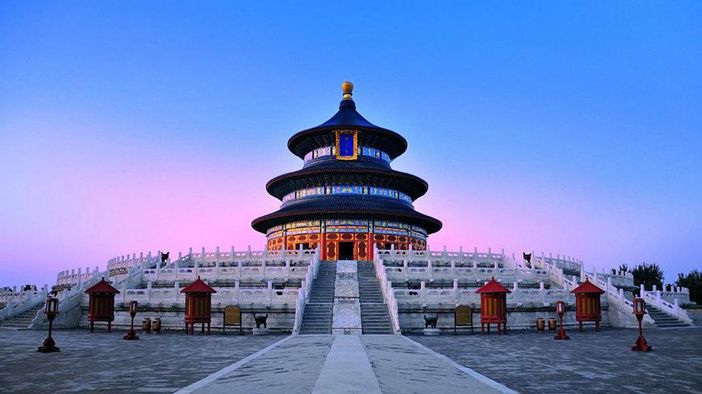
The 'Platform of Tian' (天壇) in Beijing
The ‘Platform of Tian’ (天壇) in Beijing

The sacrificial ritual in celebration of Confucius was performed in Confucian temples such as this:
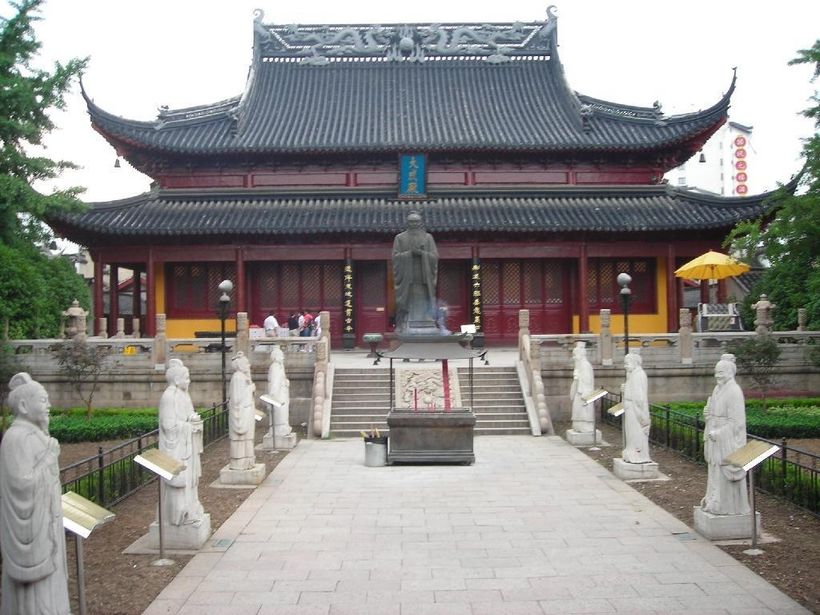
Confucius Temple in Nanjing

Everyone is allowed to perform this ritual. However, because Confucius is taken to be the common teacher of everyone in the Ru tradition, the main participators in this ritual were the Ruist literati.

By comparison, the ritual of sacrifice to one’s ancestors is more private. It is either performed before an ancestral altar in each individual household, in cemeteries, or in an ancestral temple shared by an extended family. It looks like this:
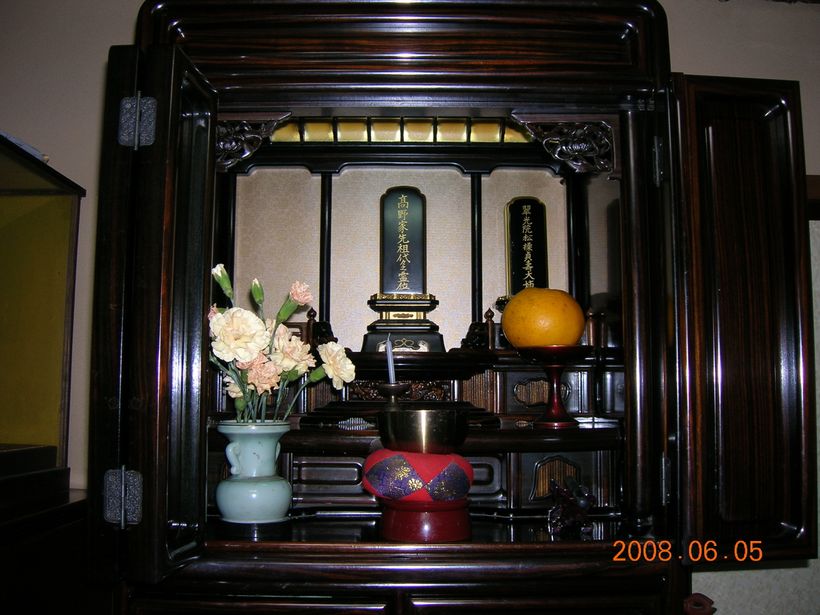
An ancestor altar in household

At this time, I would like to introduce a new ritual which combines the first two rituals, which I am calling a ritual of Tian-worship and Confucius-veneration(敬天尊孔).

The major reason that such a combination is needed is that in a contemporary context, the celebration of Tian can no longer be performed by an emperor alone. As a Ru committed and connected to the all-encompassing transcendent power of Tian, not just an emperor but every person has the need and right to celebrate it. Actually, traditional Ru literati also realized the egalitarian power of the idea of Tian, since each individual Ru was free to interpret this idea in his or her own particular way in order to counteract the ideologies and political policies which may have been endorsed by his or her emperor. This was a distinctive Ruist check and balance system within the traditional Chinese dynastic polity. However, because the polity was imperial, the ritual aspect of Tian-worship could not be decoupled from the monopoly power of the emperor. Nowadays, the political context of emperor has died out, and every Ru has accordingly recovered the right to perform a ritual of Tian-worship.

The reason I suggest combining the ritual of Tian-worship and the ritual of Confucius-veneration is that the relationship among Ru, as students of Confucius, is egalitarian. They are friends (友, you), committed to the Dao of Tian (天道, tiandao), who are trying to realize dynamic harmony at all levels of human existence in accordance with Confucius’ teachings. Therefore, when an occasion arises for Ruist friends “who are coming from afar” [Analects, 1:1] to join each other and to advance their Ruist learning, they will be able to perform the ritual of Confucius-veneration and the ritual of Tian-worship at the same time. This will remind the Ruist community that when studying the tradition, each Ru is not only a student of Confucius, but also a citizen of Tian (天民, tianmin). In this way, each Ru will continually nurture the feeling of gratitude towards the ultimate origin of their personal lives and personal energy; simultaneously, they will enhance their devotion to a life of manifesting Tian’s creativity in a distinctively human way in accordance with Confucius’s teaching about ‘humaneness’ (仁, ren).

Based upon these reasonable considerations which encourage the creation of an updated ritual (“to create rituals according to what is right,” – “以義起禮”, 禮記∙禮運), during the first ‘Ruist Friends From Afar’ Retreat in North America, held at Marsh Chapel, Boston University, on July 1-3rd, 2016, and before any formal readings and discussions even began, Ru friends performed a new Ruist ritual of Tian-worship and Confucius-veneration.

We tried to make the set-up of the ritual simple, since simplicity and authenticity are a consistent concern which traditional Ruist rituals convey. The set-up of the ritual looked like this:
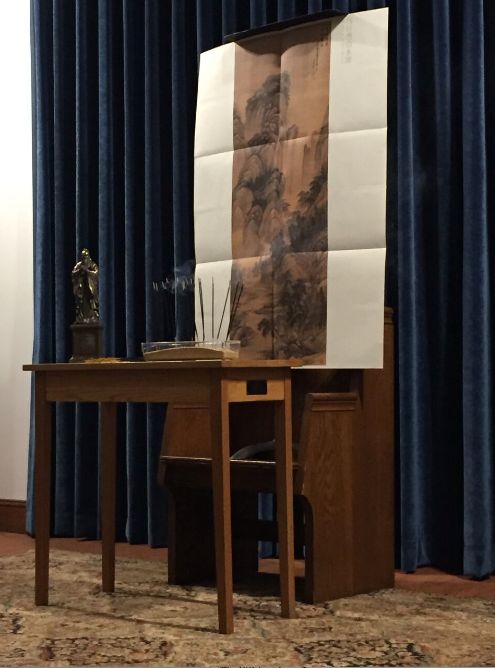
We used a Chinese landscape painting to symbolize Tian. It was hung out in front. Then, we placed a Confucius statue on a small table in front of it, and an altar in the middle for holding incense. The painting we chose was drawn by Wang Hui (王翚, 1632-1717 CE) during the early Qing dynasty. A digital version of it looks like this:

This painting was selected by courtesy of Yair Lior, as Yair, among all the friends who attended the retreat, is a Ru versed in Chinese art history. The ‘Tian’ which this painting depicts feels solemn and energetic. In choosing the painting, we made sure that it was one which included Heaven, Earth, and Human Beings, since these three are the constitutive co-creators (三才) within Tian. In future, we have a plan to choose some western landscape paintings to symbolize the same Tian. This is because Tian’s creativity is all-encompassing, whether in the East or in the West, and one major concern of the participants of the retreat was how to share the Ru tradition’s wisdom and experience with fellow Americans.

The performative act of the ritual was also simple. At the beginning of the ritual, a Presider held two sticks of incense, bowed to Tian three times, and then stepped aside a bit, and bowed to Confucius once. After this, the Presider placed the incense in the altar, and then handed another couple of sticks to a second Ruist friend. After all friends had completed their celebrations, we stood in a line facing the altar, meditated for a while, and then completed the ritual.

There is no strict meaning for the numbers mentioned above. Neither does any step in the sequence have to be rigorously followed. After the Presider has performed the ritual, each friend can follow it in his or her favorite way: bowing to Tian but not bowing to Confucius, or as we elected to do during the retreat when some friends didn’t feel comfortable performing a religious-seeming ritual, giving them the option to wait in the reading room during the entire event. In a word, the performance of this suggested ritual is entirely voluntary.

However, because I was lucky enough to be supported by friends to act as Presider of the ritual, I tried to endow a Ruist meaning in my mind at each step of the ritual. Once again, these meanings were my own interpretation, and they are heuristic, and not in any way prescriptive. Future practitioners will surely choose whether to follow my interpretation or not according to their own understanding of the Ruist tradition. Here was my thinking:

I used two sticks of incense to symbolize Yin and Yang, the two most basic forms of cosmic reality in the Ruist cosmology. In this way, holding two sticks of incense while bowing to Tian symbolized that Tian is an even higher cosmological concept than Yin and Yang, since the power it refers to creates everything in the universe including these two realities. I bowed three times to Tian because, as I mentioned earlier, Tian includes three parts: Heaven, Earth and Human Beings. This trinitarian idea of Tian in Ruism underpins the Ruist commitment to Tian as both ecological and humanistic.

We all bowed to Tian in front of the statue of Confucius because we wanted our celebration of Tian to witness to our common teacher Confucius, who taught us to treat Tian as what is ultimately meaningful and powerful, that is, what is transcendent for human life. Each friend may also choose whether or not to bow to Confucius after bowing to Tian depending upon how comfortable he or she feels about bowing to a statue of a human being.

In conclusion, what I have set out in this essay is the totality of the new Ruist ritual of Tian-worship and Confucius-veneration performed during the first retreat. The effect of the performance, I have to say, felt good and appropriate. Friends told me that it was simple and felt authentic. Their feelings toward Tian and toward Confucius were expressed and enhanced. In this way, they also felt more at home in this beloved Ru community and in the more than 2,500 year-old living Ru tradition.

Zhuangzi’s Butterfly Dream

Zhuangzi’s Butterfly Dream, by the team of Hans-Georg Moeller.

Texts and Translations: (please refer to Ctext.org; translations are adapted by me)

昔者莊周夢為胡蝶,栩栩然胡蝶也,自喻適志與!不知周也。俄然覺,則蘧蘧然周也。不知周之夢為胡蝶與,胡蝶之夢為周與?周與胡蝶,則必有分矣。此之謂物化。(《齊物論》內篇)

Formerly, Zhuang Zhou dreamt that Zhou was a butterfly, a butterfly flying about, feeling that it was enjoying itself. Zhou did not know that it was Zhou. Suddenly Zhou awoke, and was Zhou again. Zhou did not know whether it had formerly been Zhou dreaming that he was a butterfly, or it was now a butterfly dreaming that it was Zhou. But between Zhou and a butterfly there must be a difference. This is a case of what is called the Transformation of Things. (Qi Wu Lun)

莊子將死,弟子欲厚葬之。莊子曰:「吾以天地為棺槨,以日月為連璧,星辰為珠璣,萬物為齎送。吾葬具豈不備邪?何以加此!」弟子曰:「吾恐烏鳶之食夫子也。」莊子曰:「在上為烏鳶食,在下為螻蟻食,奪彼與此,何其偏也!」(《列禦寇》雜篇)

When Zhuangzi was about to die, his disciples signified their wish to give him a grand burial. ‘I shall have heaven and earth,’ said he, ‘for my coffin and its shell; the sun and moon for my two round symbols of jade; the stars and constellations for my pearls and jewels; and all things assisting as the mourners. Will not the provisions for my burial be complete? What could you add to them?’ The disciples replied, ‘We are afraid that the crows and kites will eat our master.’ Zhuangzi rejoined, ‘Above, the crows and kites will eat me; below, the mole-crickets and ants will eat me: to take from those and give to these would only show your partiality.’ (Lie Yu Kou)

莊子妻死,惠子弔之,莊子則方箕踞鼓盆而歌。惠子曰:「與人居長子,老身死,不哭亦足矣,又鼓盆而歌,不亦甚乎!」莊子曰:「不然。是其始死也,我獨何能無概然!察其始而本無生,非徒無生也,而本無形,非徒無形也,而本無氣。雜乎芒芴之間,變而有氣,氣變而有形,形變而有生,今又變而之死,是相與為春秋冬夏四時行也。人且偃然寢於巨室,而我噭噭然隨而哭之,自以為不通乎命,故止也。」(《至樂》外篇)

When Zhuangzi’s wife died, Huizi went to condole with him, and, finding him squatted on the ground, drumming on the basin, and singing, said to him, ‘When a wife has lived with her husband, and brought up children, and then dies in her old age, not to wail for her is enough. When you go on to drum on this basin and sing, is it not an excessive (and strange) demonstration?’ Zhuangzi replied, ‘It is not so. When she first died, was it possible for me to be singular and not affected by the event? But I reflected on the commencement of her being.There was once a time when she had not yet been born to life; not only had she no life, but she had no bodily form; not only had she no bodily form, but she had no vital-energy. During the intermingling of the undifferentiated and dark chaos, there ensued a change, and there was vital-energy; another change, and there was the bodily form; another change, and there came birth and life. There is now a change again, and she is dead. The relation between these things is like the procession of the four seasons from spring to autumn, from winter to summer. There now she lies with her face up, sleeping in the Great Chamber; and if I were to fall sobbing and going on to wall for her, I should think that I did not understand what was destined (for all). I therefore restrained myself!’ (Zhi Le)

Commentary by Bin Song

In a Daoist view, nothing needs to be particularly proud of about being a human. Humans are just an equal part to all other beings in the all-encompassing natural process of cosmic changes and transformations. The process of life to death of a human individual is just similar to the one from dreaming to waking-up. It is an example of how things transform. Although there are differences between these two transitioned states, neither of them needs to be prioritized. Therefore, why do we need to organize grandiose rituals to mourn our teacher’s death? Why do we need to wail over our wife’s death? Their deaths are also mere examples about how things transform in nature. Instead, we should be happy over the passing-away of our most intimate human fellows, since this is the occasion when they come back to the Dao, and hence, enjoy their pre-destined dwelling places.

Nothing is more further away from this Daoist attitude towards death than Ruism (Confucianism). In the texts of Confucius, Mencius and Xunzi, which are largely contemporaneous with the Zhuangzi, we find ample elaborations on why humans need to perform mourning rituals when our intimate family members die. Some prominent reasons are listed, but not limited to the following:

(1) Ritual performance is a “sincere,” and thus, natural expression of our grieving feeling.

(2) Rituals also refine these feelings so that the deaths become bearable.

(3) People who are still alive will expect that their children and grandchildren can also treat them well in an ancestor ritual as long as they are dedicated to nourishing the good life of their descendants. Hence, these mourning rituals furnish a motivation for living humans to live their good human life.

So, the critique made by the video to Confucian mourning rituals is indeed ungrounded: Confucius and later Ru scholars rarely, if not never, advocate “firm obedience of the younger to the older generation.” This is because 1) as stated above, rituals furnish rationales for living elder people (who will become ancestors in time) to be nourishing and moral towards the younger, and 2) “remonstration” against one’s wrong-doing parents and ancestors is championed as a necessary component of the virtue of “filiality.” More importantly, regarding the “sincere” expression of people’s mourning feeling, one great Ru scholar, Wang Yangming, in 15th century even said that only if we grieve to the utmost and appropriate measure, we can be very happy deep in our heart. In other words, to be happy about his wife’s death, one does not need to drum a basin and sing a song just like Zhuangzi did. From a Ruist perspective, he just needs to conduct a ritual and mourn sincerely so as to be joyful and content in the depth of his heart.

So, in a word, from a Ruist perspective, it is good to envision human death as constituting a natural process of cosmic changes and transformations. However, it is also natural for human beings to organize rituals to mourn our human fellows’ death.

After all, before sleeping, I routinely kiss and say good night to my wife lying in the same bed, despite the fact that I may feel quite at ease when I dream myself to be a fluttering butterfly in a few hours.

Zhuangzi’s Death of Hundun

Zhuangzi’s Death of Hundun, by the team of Prof. Hans-Georg Moeller

Texts and Translations: (the source is from ctext.org, and translations has been adapted by me.)

南海之帝為儵,北海之帝為忽,中央之帝為渾沌。儵與忽時相與遇於渾沌之地,渾沌待之甚善。儵與忽謀報渾沌之德,曰:「人皆有七竅,以視聽食息,此獨無有,嘗試鑿之。」日鑿一竅,七日而渾沌死。(《應帝王》內篇)

The Ruler of the Southern Ocean was Shu (Fast), the Ruler of the Northern Ocean was Hu (Quick), and the Ruler of the Centre was Hundun (an undifferentiated and shapeless whole). Shu and Hu were continually meeting in the land of Hundun, who treated them very well. They consulted together how they might repay his kindness, and said, ‘Men all have seven openings for the purpose of seeing, hearing, eating, and breathing, while this (poor) Hundun alone has not one. Let us try and make them for him.’ Accordingly they dug one opening in him every day; and at the end of seven days Hundun died. (Ying Di Wang)

天下有始,以為天下母。既得其母,以知其子,既知其子,復守其母,沒身不殆。塞其兌,閉其門,終身不勤。開其兌,濟其事,終身不救。見小曰明,守柔曰強。用其光,復歸其明,無遺身殃;是為習常。 (《道德經》52)

(The Dao) which originated all under the heavens is to be considered as the mother of them all.
When the mother is found, we know what her children should be. When one knows that he is his mother’s child, and proceeds to guard (the qualities of) the mother that belong to him, to the end of his life he will be free from all peril.
Let him keep his mouth closed, and shut up the portals (of his nostrils), and all his life he will be exempt from laborious exertion. Let him keep his mouth open, and (spend his breath) in the promotion of his affairs, and all his life there will be no safety for him.
The perception of what is small is the secret of clear- sightedness; the guarding of what is soft and tender is the secret of strength. Who uses well his light, reverting to its (source so) bright, will from his body ward all blight, and hides the unchanging from men’s sight. (Dao De Jing 52)

Commentary by Bin Song.

Three interpretations are given by the video on the story of Hundun in Zhuangzi.

The first interpretation is about how to preserve the vitality and longevity of human life: in a Daoist perspective, we should not indulge ourselves too much in our sensuous enjoyments; otherwise, we will leak our energy and eventually die away. This interpretation is quite consistent with Chapter 52 of Dao De Jing, which urges to close our mouths and shut up our nostrils so as to avoid dangers and risks involved by indulging life-styles and complicated social engagements. This is also consistent with the Daoist cosmology I explained before, since the stage of Hundun (an undifferentiated and shapeless whole) comes before human civilization, and hence, any life-nourishing practical regime similar to the stage of Hundun will be thought of as being able to preserve one’s vitality.

However, my critique towards this Daoist view of nourishing life is that: just like our nerve system has its sympathetic and parasympathetic components, we must balance both our active and inactive, agitated and quieted sides of human activities. The Daoist regime quite emphasizes the value of quietude and inaction over agitation and action; however, without an equal emphasis upon both sides, our life cannot be consistently nourished. In a Ruist (Confucian) term, I will aver that no matter whether we move or still ourselves during our contemplative practices, as long as we follow the pattern-principle of realities that dynamically harmonize involved beings, our life is always nourished. (My work on the Ruist way of quiet-sitting meditation can be checked here.)

The second interpretation is to critique the Confucian value of reciprocity as a form of social conformity. Such a Daoist critique, just like many other similar Daoist critiques towards the so-called Confucian values, is normally overboard. Reciprocity in the form of imposing one’s preconception of the other is actually also opposed by Confucianism, since Confucius explicitly advocates in the Analects that the harmonization of human relationship is based upon “non-uniformity” (和而不同). So, in order to critique the inappropriate forms of reciprocity and civility, Daoist texts tend to doubt the value of reciprocity and civility all together. This is the reason why I say their critiques towards Confucian values are normally based upon a straw man argument, and thus, overboard.

The third interpretation is to dismiss the rigid identity of human individuals with suspicious mythologies and ideologies. My critique towards it will be similar to my second one: yes, it is unfortunate to identify oneself with inherited mythologies and ideologies without any further self-reflection upon them. However, this does not mean that we ought to repeal the concept of “identity” all together, and just let our life drift, wander and meander in a spontaneous and shapeless way. Rather than merely deconstructing inappropriate ways of self-identification, we should also think about the right, more appropriate ways to construct one’s identity, isn’t it so?

Zhuangzi: the Happiness of Fishes

Daoist Philosophy: Ease | Zhuangzi’s The Happiness of Fish, by the team of Hans-Georg Moeller.

Texts and Translations: (please refer to ctext.org; translations adapted by me)

1, 莊子與惠子遊於濠梁之上。莊子曰:「儵魚出遊從容,是魚樂也。」惠子曰:「子非魚,安知魚之樂?」莊子曰:「子非我,安知我不知魚之樂?」惠子曰:「我非子,固不知子矣;子固非魚也,子之不知魚之樂全矣。」莊子曰:「請循其本。子曰『汝安知魚樂』云者,既已知吾知之而問我,我知之濠上也。」(《秋水》外篇)

Zhuangzi and Huizi were walking on the bridge over the Hao, when the former said, ‘These thryssas come out, and play about at their ease – that is the enjoyment of fishes.’ The other said, ‘You are not a fish; how do you know what constitutes the enjoyment of fishes?’ Zhuangzi rejoined, ‘You are not I. How do you know that I do not know what constitutes the enjoyment of fishes?’ Huizi said, ‘I am not you; and though indeed I do not fully know you, you certainly are not a fish, and (the argument) is complete against your knowing what constitutes the happiness of fishes.’ Zhuangzi replied, ‘Let us keep to your original question. You said to me, “How do you know what constitutes the enjoyment of fishes?” You knew that I knew it, and yet you put your question to me – well, I know it (from our enjoying ourselves together) over the Hao.’ (Qiu Shui)

2, 惠子謂莊子曰:「人故無情乎?」莊子曰:「然。」惠子曰:「人而無情,何以謂之人?」莊子曰:「道與之貌,天與之形,惡得不謂之人?」惠子曰:「既謂之人,惡得無情?」莊子曰:「是非吾所謂情也。吾所謂無情者,言人之不以好惡內傷其身,常因自然而不益生也。」惠子曰:「不益生,何以有其身?」莊子曰:「道與之貌,天與之形,無以好惡內傷其身。今子外乎子之神,勞乎子之精,倚樹而吟,據槁梧而瞑。天選子之形,子以堅白鳴!] (《德充符》内篇)

Huizi said to Zhuangzi, ‘Can a man indeed be without desires and passions?’ The reply was, ‘He can.’ ‘But on what grounds do you call him a man, who is thus without passions and desires?’ Zhuangzi said, ‘The Dao gives him his personal appearance; Heaven gives him his bodily form; how should we not call him a man?’ Huizi rejoined, ‘Since you call him a man, how can he be without passions and desires?’ The reply was, ‘You are misunderstanding what I mean by passions and desires. What I mean when I say that he is without these is, that this man does not by his likings and dislikings do any inward harm to his body – he always pursues his course out of his own accord, and does not (try to) increase his (store of) life.’ Huizi rejoined, ‘If there were not that increasing of (the amount) of life, how would he preserve his body?’ Zhuangzi said, ‘The Dao gives him his personal appearance; Heaven gives him his bodily form; and he does not by his likings and dislikings do any internal harm to his body. But now you, Sir, spend your spirit as if it were something external to you, and subject your vital powers to toil. You sing (your ditties), leaning against a tree; you go to sleep, grasping the stump of a rotten dry tree. Heaven selected for you the bodily form (of a man), and you babble about the words of hardness and whiteness.’ (De Chong Fu.)

3, 惠子謂莊子曰:「吾有大樹,人謂之樗。其大本擁腫而不中繩墨,其小枝卷曲而不中規矩,立之塗,匠者不顧。今子之言,大而無用,眾所同去也。」莊子曰:「子獨不見狸狌乎?卑身而伏,以候敖者;東西跳梁,不避高下;中於機辟,死於罔罟。今夫斄牛,其大若垂天之雲。此能為大矣,而不能執鼠。今子有大樹,患其無用,何不樹之於無何有之鄉,廣莫之野,彷徨乎無為其側,逍遙乎寢臥其下?不夭斤斧,物無害者,無所可用,安所困苦哉!」(《逍遙遊》內篇)

Huizi said to Zhuangzi, ‘I have a large tree, which men call the Ailantus. Its trunk swells out to a large size, but is not fit for a carpenter to apply his line to it; its smaller branches are knotted and crooked, so that the disk and square cannot be used on them. Though planted on the wayside, a builder would not turn his head to look at it. Now your words, Sir, are great, but of no use – all unite in putting themselves away from them.’ Zhuangzi replied, ‘Have you never seen a wildcat or a weasel? There it lies, crouching and low, till the wandering small creatures approaches; east and west it leaps about, avoiding neither what is high nor what is low, till it is caught in a trap, or dies in a net. Again there is the Yak, so large that it is like a cloud hanging in the sky. It is large indeed, but it cannot catch mice. You, Sir, have a large tree and are troubled because it is of no use – why do you not plant it in a tract where there is nothing else, or in a wide and barren wild? There you might saunter idly by its side, or in the enjoyment of untroubled ease sleep beneath it. Neither ratchet nor axe would shorten its existence; there would be nothing to injure it. What is there in its uselessness to cause you distress?‘ (Xiao Yao You)

4, 莊子送葬,過惠子之墓,顧謂從者曰:「郢人堊慢其鼻端若蠅翼,使匠石斲之。匠石運斤成風,聽而斲之,盡堊而鼻不傷,郢人立不失容。宋元君聞之,召匠石曰:『嘗試為寡人為之。』匠石曰:『臣則嘗能斲之。雖然,臣之質死久矣。』自夫子之死也,吾無以為質矣,吾無與言之矣。」(《徐無鬼》外篇)

As Zhuangzi was accompanying a funeral, when passing by the grave of Huizi, he looked round, and said to his attendants, ‘On the top of the nose of that man of Ying there is a (little) bit of mud like a fly’s wing. He sent for the artisan Shi to cut it away. Shi whirled his axe so as to produce a wind, which immediately carried off the mud entirely, leaving the nose uninjured, and the man of Ying standing undisturbed. The ruler Yuan of Song heard of the feat, called the artisan Shi, and said to him, “Try and do the same thing on me.” The artisan said, “Your servant has been able to trim things in that way, but the material on which I have worked has been dead for a long time.” Zhuangzi said, ‘Since the death of the Master, I have had no material to work upon. I have had no one with whom to talk.’ (Xu Wu Gui)

Commentary by Bin Song.

The quoted Passages 1 and 4 are utilized by the video to explain the joy of rambling and seemingly aimless intellectual debate just as the joy of swimming fishes. However, the encounters of Zhuangzi and Huizi are ample in the text of Zhuangzi. If we consider other encounters together with the quoted ones, the message conveyed by the text of Zhuangzi is actually quite consistent.

In the above Passage 2, Zhuangzi disapproves of Huizi, and avers that an obsession with conceptual analysis and philosophical debate on right and wrong is to exhaust the natural life given by heaven. Therefore, in order to continue the naturally happy life of human beings, Zhuangzi thinks we should give up such analytic thinking all together.

The same message is delivered by Passage 3, where Huizi insists upon the definition of “greatness” and “usefulness” of things according to how they fits for varying human needs. However, Zhuangzi thinks this way of thinking about usefulness is just relative to, and thus, limited by social conventions. If we are free from such conventions, we can genuinely find the greatest use of a seemingly useless tree, niv., that of “there is nothing to injure it” and hence, keeping the tree’s natural longevity.

Therefore, in light of the passages 2 and 3, the debate about “happiness of fishes” between Zhuangzi and Huizi is actually to highlight, from the perspective of Zhuangzi, the limitedness of the analytical approach of Huizi’s thought. What Zhuangzi means is that analytical rigor, such as the one that features Huizi’s thought, cannot grasp the wholeness of the Dao, and hence, cannot let humans affectively being united with it. Instead, only if we give up our analytic thought, stop debating about right or wrong, and furthermore, aimlessly wander without being constrained by social conventions, we can achieve the ideal Daoist state of joy and the good life.

Seen from this perspective, the so-called intellectual friendship eulogized in Passage 4 is more about expressing Zhuangzi’s own feeling towards the ample intellectual exchanges between him and Huizi. Huizi tries to construct theories or discourses to argue positively about some endpoint. However, each of such constructions will be addressed by Zhuangzi for the purpose of deconstruction, and, hence, for disclosing the unique Daoist way of life of “sauntering idly by the side of a useless tree.” However, whether Huizi understands intellectual activities also as such would remain a question, and whether Zhuangzi’s such understanding can remain accommodating to Huizi is also worth asking.

Hence, my comment towards such a thought of Zhuangzi will be consistent with my previous one: I admit that union with nature, such as the contemplation over swimming fishes, is a great source of joy. However, if the joy is beyond human language to express, it is definitely not contrary to human endeavors which take such a try. In other words, the non-rationality of the mystical feeling or intuition towards the union with Dao is not contrary to rationality. In a certain way of life, it can even include the pursuit of rationality. That’s when human language is taken as a fallible, perfectible, yet indispensable tool to describe and integrate every piece of life experience into a growing and harmonizing whole.

Also, I have to remind that continual deconstruction is itself a claim to make, a stance to hold, and hence, a potential orthodox to defend. Therefore, when Zhuangzi advocates such a continually deconstructive, Daoist way of life, it is still a way of life, which has been argued and debated by Zhuangzi in the way of apparently non-debate, and non-argument. Understood as such, the wandering joy of intellectual activities beside a useless tree is factually based upon a specific understanding of what intellectual activities are, and in light of the above discussion, I doubt whether Zhuangzi ever thinks of alternative ways of understanding intellectual activities. In other words, if Zhuangzi knows the joy of fishes from his guts, does Zhuangzi really knows the joy of Huizi?