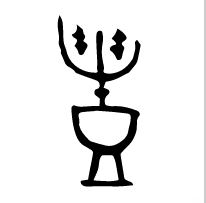
The Filiality of Shun

Audio: The Filiality of Shun, by Dr. Bin Song.
Video: The Filiality of Shun, by Dr. Bin Song.

Hallo! This is Prof. Bin Song at Washington College. To continue the previous topic, in this unit 4 of the course Ru and Confucianism, we will discuss another legendary sage-king at the beginning of the Ru tradition, Shun, who stepped onto the throne because of Yao’s abdication.

Yao accepted Shun’s candidacy to become the next King, because the assembly of representatives recommended Shun’s virtue of filiality (孝, xiao), and its another translation is “filial piety”. Because the virtue of filiality takes such a central role to the Ru ethic, we would focus upon this topic when discussing Shun. The above recommendation says that:

“Shun is the son of a blind man. His father was obstinately unprincipled; his (step-)mother was dishonest; his (half-)brother Xiang was arrogant. He has been able, however, by his virtue of filiality to live in harmony with them, and to lead them gradually to self-discipline, so that they no longer proceed to great wickedness. ” (Canon of Yao, translation adapted from James Legge)

But why can Shun finally transform his wicked family? The Classic of Documents continues to tell us that:

“In the early time of the King (Shun), when he was living by mount Li, he went into the fields, and daily cried with tears to the compassionate Heaven. To his parents, he took to himself all guilt, and charged himself with their wickedness. (At the same time,) with services to deliver, he appeared respectful before his father Gu-Sou, looking grave and awe-struck, till Gu also became transformed by his example. (This is how) entire sincerity moves the spirits!” (Counsel of the Great Yu, translation adapted from James Legge)

Ru classics added some details to Shun’s filial deeds. For instance, the Record of the Grand Historian by Si Maqian tells us that Shun’s family were once so wicked as to plot to kill him for multiple times, but Shun succeeded to foresee and flee all these plots in extremely smart ways; however, when Shun’s family’s unjust punishments to Shun were not that severe, Shun would simply bear them (《史记 五帝本纪》). Mencius also told us that when Shun cried with tears to the compassionate Heaven, he appeared to “resent” (怨) his parents because he always “admired and loved” (慕) them. However, Shun would not follow every order of his parents. A notable instance is that Shun did not ask for his parents’ approval when deciding to get married. This is because if he did so, he would fail to marry anybody, and if stripped of the possibility of continuing the family’s lineage, he would have been more unfilial. (Mencius 5A)

Given the first, also the greatest example of filiality in such a disintegrated and dysfunctional family, the later Ru tradition is sharply alert to the possible existence of evil and wickedness of one’s parents. Overall, the principle to respond to the wrong-doings of one’s parents is described as “remonstration” by the Classic of Filiality, a book written around the 3nd century B.C.E under the influence of Confucius’s thought. It says:

“The father who had a son that would remonstrate with him would not sink into the gulf of unrighteous deeds. Therefore when a case of unrighteous conduct is concerned, a son must by no means keep from remonstrating with his father, nor a minister from remonstrating with his ruler. Hence, since remonstration is required in the case of unrighteous conduct, how can (simple) obedience to the orders of a father be accounted as filial?” (Translation adapted from James Legge)

In a more concrete term, Confucius explained the method of remonstration with one’s parents in the Analects 4:18 in this way:

The Master said, “In serving your parents, remonstrate with them gently. After showing your aspiration, though they do not comply, remain reverent but do not abandon your purpose. Though weary, hold no resentment.”

And Confucius’s method is elaborated in the Classic of Rites as such:

If a parent has a fault, (the son) should with bated breath, bland aspect and gentle voice, remonstrate with him. If the remonstration does not take effect, he will be the more reverential and the more filial; and when the father seems pleased, he will repeat the remonstration. If he should be displeased with this, rather than allowing him to commit an offence against anyone in the neighborhood or countryside, (the son) should strongly remonstrate. If the parent be angry and (more) displeased, and beat him till the blood flows, he should not presume to be angry and resentful, but be (still) more reverential and more filial. (Nei Ze, translation adapted from James Legge)

Good, with all these original materials in hand, how do we make sense all of these? Why can Shun continually love his parents even if they were extremely wicked? In particular, why did Shun’s filial love towards his parents not turn into a simple and blind obedience? Instead, Shun’s ultimate purpose was to turn his family to be good humans who know right or wrong, and thus, can discipline themselves.

After reading Shun’s filial story, although some scenarios of it seem extremely problematic from today’s perspective such as Shun’s family’s murderous plots, we are still left with a questioning mind to try to make sense of it at least from its own perspective. In human history, puzzling stories such as Socrates’s suicide and Jesus’s crucifixion all defy against normal human understanding. But once understood, they all have left an indelible mark upon a certain type of human spirituality. Since Shun was taken as the greatest example of filiality by the Ru tradition, it is not a lesser deal for us to try to comprehend it.

In order to sympathize with Shun’s filial story, we need to understand the motivation, method, and consequence of his filial deed.

So, what motivated Shun to keep filial even in face of wicked and abusive parents and brother? Mencius says that love towards one’s parents belongs to humans’ inborn disposition of “conscientious knowing” (良知) and “conscientious ability.” (良能) He also likened it to the spontaneously arising feeling of empathy and alarm towards a baby about to fall into a well. In the further development of Ruist metaphysics starting from Mencius, running through the Classic of Change, and all the way down to Neo-Confucianism, this moral sprout of conscientious knowing is seen as the manifestation of the virtue of humaneness leading to a universal love towards all beings in the universe. And this definitive virtue of human beings is furthermore connected to the power of daily renewal of the entire cosmos called “birth birth” or “constant creativity.” Seen from this metaphysical-ethical framework, why did Shun still love his parents even if they are wicked towards him?

Firstly, this is because Shun just cannot help doing so. That Shun had such a sensitive inner moral compass and grew up to hold on to it speaks to the fact that his adult life derived from a not too abusive childhood, and since he maintained to be a full-shaped human, he naturally had this constant feeling of love, admiration and concern towards his parents, particularly towards his father. In other words, this is a strong, natural feeling irreducible from the nature of Shun’s humanity, and as such, Shun must learn how to live with it, rather than suppressing or overlooking it to its oblivion, which is impossible.

Secondly, extraordinary human deeds are normally grounded upon a firm commitment to something beyond and larger than their nearby world. When describing Shun’s sincerity, the Classic of Documents says: “his mysterious excellence was resonated on high” (Canon of Shun) and this spoke to Shun’s faith. Using the language prevalent in the aforementioned Ruist metaphysical ethics, we can say what deeply motivated Shun is his unitary experience with the ever creating heaven and earth while being committed to fulfilling his human potential to continually humanize himself and the people surrounding him. In this sense, there is a faith in the depth of Shun’s heart towards the goodness of human nature as the goodness is entailed by the continual creating and life-affirming power of the cosmos. As discussed about the meaning of Ru in Unit 1, the ultimate mission of a Ru’s life is to manifest the cosmic creativity in the human world in a uniquely humane way, and the sustainability of human civilization becomes therefore one most wanted goal of this manifestation. For such a sustainability, the perfecting of parental relationship is definitely a precondition. If children lost trust towards their parents, or if parents lost trust towards their children, what else can we expect to exist in human civilization, let alone to sustain and thrive it? Therefore, the second answer to the question just asked is that, Shun had to love his parents in this way since this constitutes what is ultimately meaningful, purposeful and powerful for him.

However, how Shun remonstrated with his parents was highly consistent with the method described by later Ruist Classics that we have quoted, that is, Shun never abandoned his purpose of remonstration until he successfully transformed his parents. However, one notable distinction here is that given the extreme wickedness of his parents, it is conceivable that Shun’s remonstration did not take many verbal forms. Instead, he mainly remonstrated via his deeds, and influenced through his examples. For instance, he fled his parents’ murderous plots in order not to make them commit unrighteous conducts and serious crimes. He went to the fields to cry his resentment to the Heaven, with a consequence that people could hear it, and thus, circulated the message back to his parents. Shun also got married against his parents’ will, and respectfully did his duties and services before the eyes of his father. All of these gave us an idea about how Shun was persistent to do the right thing, and try to correct his parents’ wrong-doing, while showing deep love and respect to them.

There are undoubtedly great consequences of Shun’ filial deeds to later reflections upon family relationship in the Ru tradition.

Firstly, this unswerving faith towards the goodness of human nature is mostly supported by Ru scholars within the realm of family relationship. The relationship between Ruler and ministers is instead thought of as being much more fragile because if the rulers do not listen to remonstration, a Ru would think there is no obligation to continually indicate the loyalty towards them. In extreme cases, as argued by Mencius, it is even legitimate to overthrow a ruthless dictator.

Secondly, to love parents regardless of their wicked intention, to persist in rectifying parents’ wrong doing because of one’s indestructible love towards them, and more importantly, to abide by what is right to manifest humaneness in even broken family relationships, all of these constitute unique traits of the Ruist understanding of the virtue of filiality. To be genuinely filial, one needs to cultivate the virtue of “piety” towards the continually creating power of the cosmos, the virtue of “faithfulness” towards the intrinsic goodness and transformability of human nature, and the virtue of “independent thought” in the sense of abiding by the right principles in spite of parents’ wrong-doing and bad influences. It is indeed not an easy process; however, it speaks a lot to the feature of Ru spirituality.

And finally, seen from the perspective of self-cultivation, it is indeed very desirable not to give up one’s intention to rectify the wrong-doings of one’s family. However, seen from the perspective of social government, it cannot be denied that the wickedness of some human beings is very hard, if not impossible, to be transformed. Therefore, morally, Shun’s story encourages people to treat their family as such in a similar situation; however, a legal system of law and punishment should also be established so that these wrong-doings would not bring unbearable harms. This is the reason why although Confucius thought governance through ritual and moral impact is preferred, governance by law and punishment cannot be repealed either (Analects 2.3).

Seen from today’s perspective, any murderous intention and any bodily abuse by a wicked parent to their children, simply should not be tolerated in any sense. They should be immediately reported, and we should find all legal methods to stop them. However, if we elevate Shun’s filial story out of these ancient contexts, and look at its timeless kernel, we will find it implies one principle of human life that applies even today, that is, for any human relationship to go normal and well, a moral sense of right or wrong must always accompany the feeling of love and care, vice versa, and accordingly, the independent thought of individuals must never be abandoned.

Recommended Further Reading:

The Classic of Filial Piety
Michale Ing, “Born of Resentment: Yuan 怨 in Early Confucian Thought.” Dao: A Journal of Comparative Philosophy 15.1 (March 2016): 19-33.
Keith Knapp, Selfless Offspring: Filial Children and Social Order in Medieval China. Honolulu: University of Hawai’i Press, 2005.

Quiz:

1, What is special about Shun’s family?

A, His mother dies early, his father is obstinately unprincipled
B, His father, step-mother, and step-brother were extremely wicked and cruel towards him

2, When parents did something wrong, the Ru tradition’s instruction to their children is:

A, simple obedience.
B, crying while doing nothing.
C, persistent remonstration until success.

3, Which of the following Ru classics talks of the virtue of filiality?

A, The Classic of Filial Piety
B, The Classic of Documents
C, The Analects
D, The Classic of Rites

4, Love towards one’s parents belongs to humans’ inborn disposition called “Conscientious knowing” or “Conscientious ability.” Which philosopher has this view?

A, Confucius
B, Mencius
C, Xunzi

5, What is the ultimate mission of a Ru?

A, performing ritual
B, pursuing education
C, being a governmental official
D, manifesting humaneness to continue the constantly creativity of the cosmos in the human world.

6, If rulers do not listen to the remonstration of ministers for multiple times, what should these ministers do according to Ruism?

A, continue to be loyal and continue to remonstrate
B, no need of loyalty towards the rulers (which may mean leaving the government or the state)
C, in extreme cases, help to overthrow the rulers.

7, within a couple of sentences, please explain why Shun is thought of as the most filial son in the Ru tradition.

8, What’s your understanding of Shun’s story? Do you have any critical thought on it?

Unit 3: When is the Beginning of Confucianism?

Audio: the beginning of Confucianism, by Dr. Bin Song.
Video: the beginning of Confucianism, by Dr. Bin Song

Hallo, this is Prof. Bin Song at Washington College. This unit of the course “Ru and Confucianism” will help you understand when is the beginning of Confucianism, or should we say, the beginning of the Ru tradition, and what the earliest democratic political institution in ancient Chinese civilization looks like.

It is an extraordinary task for Ru scholars to talk about the beginning of the tradition. This is because the beginning, as it is described by Ru classics such as the Classic of Documents and discussed by Confucius in the Analects, expresses the ideal of the Ru way of life, and therefore, is more a concept of morality and politics, rather than one of time and history. As one of my favorite ancient Chinese poets, Du Fu (712-770 C.E), mused: the purpose of his poetry-writing is “to help the emperors to become as magnificent as Yao and Shun, and to turn people’s morals and customs back to be that simple and amiable.” (致君堯舜上, 再使風俗淳)

As also indicated by Du Fu’s verse, the beginning of the Ru tradition starts from the stories of rulership by the sage-kings, Yao and Shun. The times when these kings lived were respectively called Tang and Yu, and according to the best archeological evidences we can estimate today, we are talking about almost two thousand years before the life of Confucius (551-479 B.C.E).

To consider the time of Yao and Shun as the beginning of the Ru tradition does not mean that there is no notable leader prior to Yao and Shun. Instead, if you read histories such as Si Maqian’s “The Record of the Grand Historian,” you will find an even older lineage of legendary kings in ancient China, such as King Yan, King Huang, and the King of Fu Xi. However, please remember, Confucius himself is also a historian. Among the six classics he compiled to teach his students, there are one grand history and another local history. The grand history is titled as the Classic of Documents (尚書), and it is opened with the chapters about Yao and Shun.

So, why did Confucius decide to put Yao and Shun at the beginning of the history which matters greatly to the Ru tradition? From Confucius’s discussion on related topics in the Analects, we find two reasons: firstly, the factuality of anything beyond the time of Yao and Shun passed down to Confucius’s purview was hardly to confirm (Analects 3.0). Secondly, which is more important, the personalities and rulership of Yao and Shun represented an ideal of the Ru way of life so that later Ruists can take this ideal as a supreme guidance to evaluate, live through, and contribute to varying regimes, societies and times (Analects 8.19, 15.5). In this sense, the stories of Yao and Shun, together with the one of Duke of Zhou whom we will focus on later, are major resources of Confucius’s thought, and should be studied carefully by students interested in the Ru tradition today.

Understood in this way, the crucial lesson we need to learn about the stories of Yao and Shun is: what kind of ideal of Ruism did they represent? To answer this question, we will focus upon Yao in this episode, and Shun in next one.

Do you still remember the text we once read about the Great Learning? It lays out a very concrete program of self-cultivation and social engagement for a Ru learner, starting from cultivating inner excellences, proceeding through loving and renewing the people, and aiming finally at abiding in the highest good, which is elaborated as peace and harmony throughout the world. Now, let’s read the opening paragraph of the Classic of Documents, and see how extraordinarily these two texts are related:

“Yao was reverential, intelligent, cultured, and thoughtful – naturally and without effort. He was sincerely courteous, and capable of all deference. The bright (influence of these qualities) was felt through the four quarters (of the land), and reached to (heaven) above and (earth) beneath. He made the able and virtuous distinguished, and thence proceeded to the love of (all in) the nine classes of his kindred, who (thus) became harmonious. He (also) regulated and polished the people (of his domain), who all became brightly enlightened. (Finally), he united and harmonized the myriad states; and so the black-haired people were transformed. The result was (universal) concord.” (Adapted from translation of James Legge)

In other words, Yao started to cultivate himself with all needed qualities to live a self-content personal life, and to govern a country well. Then, he was dedicated to aligning his extensive family; finally, he influenced the people beyond his family, and succeeded to unite a myriad of states under the heaven! Because he did this so well, he looked “natural and without effort” while achieving all of these! This effortless achievement was described by later Ruists as embodying the virtue of “non-action” (wu-wei), a sign of the highest moral achievement of a Ruist sage.

If you continue to read these opening chapters of the Classic of Documents, you will find details of Yao’s policies by which he could achieve this effortless good governance. For instances, he appointed able and virtuous talents to varying governmental posts, and set reasonable rules for the promotion of these governmental officials; he cherished the value of education, and established offices to take charge of educating the people, particularly about how to better human relationships within families; he also governed the country primarily through the moral impacts generated by virtuous leadership, elegant music and rites, while secondarily through establishing laws and punishments.

However, although these ways of governance by Yao all represent the Ru ideal to a certain degree, none of them can surpass the influence of the institution called “abdication,” (禪讓) which is about how to transition the supreme political power to the next King.

According to the Classic of Documents, when Yao turned into old, he summoned an assembly of regional leaders to decide how to transition his power to next king. Firstly, these leaders recommend the son of Yao, but Yao denied it because he thought his son was not good enough to be a candidate. Then, all these leaders recommended Gun, a regional leader in an aristocratic family; although Yao did not quite agree with this either, he finally yielded to the majority opinion of the assembly. However, after nine years of probation, Gun failed to prove that he was an ideal candidate mainly because he did not stop the big flood in those years. Then, Yao had to summon the assembly again, and said it can recommend a bright man even if this entails “ to raise a person who is poor and lives remotely.” (明明揚側陋). Eventually, the assembly recommended Shun, who was a very poor man in the lowest class but became well-known because of his filial conduct within his family. Then, Yao accepted this candidate and started another long period of probation until Shun’s final appointment.

As constructed by contemporary scholars, the procedure of this institution of abdication possibly consists of six steps.

First, leaders from different regions of a country will form an assembly of representatives;
Second, the assembly, together with the incumbent king, will nominate multiple candidates for the future king;
Third, the nominated candidates have a chance to answer raised questions for entering the next step;
Fourth, after the Q&A test, the assembly and the king will decide collectively through a majority vote who will be appointed to different levels and posts of government for a long “probation” period of three to thirteen years per cases we know;
Fifth, at the end of this probation period, the incumbent king will decide whether to accept the candidate as the head of the government;
Sixth, if approved by the king, the candidate will be the head of the government, and when the incumbent king passes away, the head of the government will become the new king. During the tenure of the head of government, the king-elect does not have the power to appoint new officials until the incumbent king passes away.

Given these six steps of abdication, anyone familiar with the imperial history of ancient China will find how distinguishing it is. The later Chinese history is one of dynasty after dynasty, and each dynasty is ruled by a royal family with its distinctive surname. These royal families either overthrew the previous dynasty or unified a disintegrated country through sword and blood. Within a given dynasty, the transition of supreme political power from one emperor to another is largely following the rule of the inheritance by the eldest son, but not without cruel and violent political struggles for it.

In contrast, the institution of abdication prevalent in the time of Yao and Shun succeeded in transitioning power with peace, and the balancing power from the assembly of regional leaders also gives us a glimpse into how the idea of “democracy” is not entirely alien to the minds in the earliest stage of Chinese civilization. More importantly, the willingness of Yao to yield his power to a poor commoner with an entirely different family name from him speaks to one most important Ruist principle of ideal politics: that is “to respect worthies” (尊賢), which means to guarantee that the most able and virtuous people can be appointed to the governmental positions fit for their talents. In the later development of Ruist political philosophy, this “human” element was also thought of as the most important one for good governance within a fixed political institution.

Unfortunately, this earliest democratic institution of abdication does not last long. As you may have noticed, the supreme leader, the king, still held a mighty power in the system, so if his power grows out of balance, it will be easy for him to pass on the power to his son, and thus, end this institution once for all. This was exactly what happened to the successor of Shun, namely, Yu, who passed on his throne to his son, who established a new dynasty called Xia. And starting from Xia, Chinese history waved farewell to the ideal politics of Yao and Shun, and became one of dynastic politics dominated by competing royal families. In this later type of imperial politics, the best Ruist scholars can aspire for is, as Du Fu’s poetry indicated, to help their emperor to return to be like Yao and Shun, but these scholars would never be able to dream to be the emperor themselves. Because of this, the original Ruist principle of “respecting worthies” central to the earliest democratic ideal is also dramatically undermined.

In a contemporary perspective, the most effective political regime we know so far which can achieve peaceful transition of political power is the western type of liberal democracy. However, the reason why liberal democracy can achieve this is based upon multiple institutions supporting its key ideal of government for the people, which include the universal suffrage, the competition among multiple parties, the check-balance among governmental branches, etc. In comparison, the most original form of democracy in ancient Chinese civilization, the abdication, still predominantly relied upon the personal choice of the supreme leader, and although it contained some democratic element, its institution was still very premature regarding its lack of those corresponding supporting systems in contemporary liberal democracy. However, even so, the central idea of “respecting worthies” based upon a system of meritocracy and power balance still sheds a great light upon even those contemporary practices of liberal democracy. Today, what Ruist scholars are particularly concerned is how to incorporate this uniquely Ruist meritocratic and democratic political philosophy into the contemporary practices of liberal democracy so as to perfect it and make it more fit for facing the challenges of human society today. In this regard, I hope the study of the most original democratic idea at the beginning of the Ruist history will bring much inspiration.

References:

Book of Yu 虞書, translated by James Legge.
朱小丰, “论禅让制度”, 《社会科学研究》2003年第3期, pp.125-150.

Further Recommended Reading:

Sungmoon Kim, “Confucian Constitutionalism: Mencius and Xunzi on Virtue, Ritual, and Royal Transmission,” The Review of Politics, Vol. 73, No.3 (Summer 2011), pp. 371-399.

Quiz:

(1) To find the beginning of the Ru tradition, which classic should we read?

A, The Classic of Documents
B, The Classic of Rites
C, The Record of Grand Historian
D, The Classic of Change

(2) “To help the emperors to become as magnificent as Yao and Shun, and to turn people’s morals and customs back to be that simple and amiable.” Who wrote this poem?

A, Du Fu
B, Confucius
C, Han Yu

(3) The Ruist idea of “non-action” (無為, wuwei) means:

A, One did something so well that the performance even looks effortless.
B, Doing nothing at all and then, following the flow of nature.

(4) By what policies did Yao achieve effortless good governance?

A, Appointing right people for the right position.
B, Enlightening people about what to do themselves through education
C, Creating good music and rites so that people enjoy performing them while transforming themselves.
D, Leading people through one’s moral impact.

(4) What is the relationship between Yao and Shun?

A, Shun is the son of Yao.
B, Shun had no blood relationship with Yao, but was recommended to succeed Yao’s kingship.
C, Shun overthrew Yao’s kingship in a battle.

(5) Which is the central idea of Ruist political philosophy?

A, To respect worthies
B, To love one’s father
C, To vote for leaders.

(6) What strikes you about the procedure of abdication (禪讓) through which Yao transitions his power to Shun?

(7) Do you agree with every aspect of the contemporary institution of liberal democracy? How can you improve it inspired by what you learn about the the beginning of Confucianism?

Unit 2: What to Read First about Confucianism

Audio: What to Read First about Confucianism, by Dr. Bin Song.
Video: What to Read First about Confucianism, by Dr. Bin Song

Hallo, this is Prof. Bin Song at Washington College. This episode is to let you know what to read first when learning Confucianism, or as I explained in the first episode, what to read first when learning the Ru tradition.


In general, the Ru tradition emphasizes practice more than theory, doing more than saying. However, for beginning learners, one most frequent question we can expect is still: what should I read first? After all, without ideas to guide, we can barely practice anything.


To answer this question, normally, many people will go to the book called the Analects (in Chinese, 論語), which is a book to have compiled sayings of Confucius and conversations between Confucius and his students, as their first pick. They may think since “Confucianism” is called “Confucianism,” and since there is one book all about Confucius’s original sayings, the Analects is naturally the first choice.


I would not recommend you to do so mainly because of two reasons:


Firstly, the Analects is like a book of collected notes among Confucius’s students to help themselves to continue the enterprise of social and political activisms that the school of Confucius originally aimed for. Since this is a notebook, without understanding the overall nature of that enterprise, it is very easy for beginning learners of Ruism to get lost among the so many detailed and minute discussions recorded there. This is also perhaps the reason why among beginning learners of ancient Chinese philosophy, Laozi’s Dao De Jing turns out to be more popular. When you open the Dao De Jing, and read its first verse “the Dao that can be said is not the genuine Dao,” you will say wow! And each chapter of the Dao De Jing reads like a philosophical treatise, very thematized and organized. However, when you open the Analects, it says “The Master says: Learn and timely apply what you have learned, is it not a joy?”; Ok, it feels warm, wise, a little bit breezy, but definitely not quite a wow. If you continue to read, you will find Confucius and his students are talking about so many concrete issues of human life in general and their society in particular, which include how to treat family, how to learn, how to govern, how to do one’s business and duty, how to speak, how to listen to music, etc. As I said, without a pre-understanding of the overall nature of Confucius’s school and his pedagogy, we will easily get lost when we read his students’ notes. If you give up the book and your interest of the Ru tradition right away because of this, believe me, this will be one of the most misguided decisions you made in your life.


Secondly, if the Analects is the notebook compiled by his students, what textbooks did Confucius use to teach his students? They are supposedly more, or at least equally important than the notebook, right? These textbooks were of six kinds, and they were pre-Confucian ancient classics compiled by Confucius to teach his students: the Odes (poetry), the Documents (ancient history), the Rites (think about the meaning of Ru we explained before), the Music (which we cannot find today since it is said to have been lost during later dynastic changes), the Change (the famous divination book), and the Spring and Autumn (the history of Confucius’s home state). In other words, after Confucius passed away, the Analects would be a notebook to guide new generations of Ru learners to study those ancient Classics. This situation makes the first pick of the Analects by interested beginning learners even more problematic, because without understanding the overall purpose of Confucius’ pedagogy, and the nature of the Ru community he helped to incubate, we really do not understand what is at stake in that would-be first pick.


Fortunately, Ruist leaders have faced a similar issue to tackle in history, since they also need to introduce the Ru tradition to beginning learners. And their response starting from the ninth century in the common era is to read a book with a much smaller size than the Analects, which is titled as Great Learning 大學. The text of Great Learning was originally one chapter in the Classic of Rites, and as instructed by those Ruist leaders, the first opening section includes the words said by Confucius, and it later parts are about the commentary written by Confucius’s student, Zeng Zi, on Confucius’s words. This arrangement of the text is also very typical to many Ru writings: the first part is called “Classic” 經, and the second part is called “Commentary” 傳. I attach my own translation of the Classic part of the Great Learning here, together with my interpolated annotation. If you are a student in the course of “Ru and Confucianism,” I would require you to read carefully every word on this chart. Here, I will mainly read the translation part.


So, now, you understand why this text was chosen by those Ruist leaders as the entry text to the Ru tradition, right? In this text, the Ruist enterprise of self-cultivation and social activism is programmed as concretely as three phases in the first paragraph, eight steps in the third, and with a method of daily meditation or self-contemplation described in the second paragraph. With such a concrete structure of learning and its explicitly stated ultimate goal, everything to learn down the road will be nicely fitted into a mindset, and therefore, beginning learners will get a greater sense of orientation regarding their overall understanding of the Ru tradition.


As for the interpretations of this text, at the first glimpse, particularly when you read my annotation in the chart, the text seems pretty much self-explanatory. However, I would like to warn you beforehand that the text also turns out to be among the most debated texts in the intellectual history of Ruism. Each mentioned term, such as “attain the knowledge,” “the investigation of things,” “feeling content,” and so on, undergoes an unusually intensive scrutiny and debate among Ru thinkers in history. Without any exaggeration, I will say the entire history of the so-called Neo-Confucianism, which lasted from 9th to 19th century across different East Asian countries, is one history of debate on the terms of the classical part of the Great Learning. In particular, two major competing lineages of learning in Neo-Confucianism, the school of principle and the school of heartmind, derive from their different understandings, and their accordingly different practical methods of social activism surrounding the key term “knowledge” mentioned in the third paragraph of the Great Learning. This phenomenon is also not surprising because since the Great Learning is the first text one needs to read when starting to learn the Ru tradition, everything they learn later will be constantly referred back to this foundational text, and therefore, people would intensively debate each other depending upon their overall experience of Ru learning and human living.


Nevertheless, as the instructor of this course, I have my own understanding of the text. In the following, I will stress several points of my understanding beyond what I have said in the annotation. This will give you an initial guidance for your further learning of the Ru tradition, but in the long run, given your understanding of the tradition gets more mature, I do hope you can have your own understanding of the text, and are able to apply your understanding to the benefits of your life.


Firstly, the position of “individual” in this Ruist pedagogy is very special. If the understandings of human self in world philosophies and religions are put in a spectrum, Buddhism will lie at the far left since it thinks humans essentially have no self whatsoever. Whereas, Thomas Hobbes’ idea of “everyone is the enemy against everyone” in the pre-societal state of nature will lie at the far right because human selves are thought of as irreducible atoms with their counteracting forces pitted against each other. However, as indicated by the Great Learning, the Ru understanding of self will lie rightly in the middle. The program of great learning starts from the strengthening of human self, namely, the manifestation of excellences in each individual in the three-phase paragraph, and the cultivation of one’s personal life in the eight-step paragraph. But these individual self-strengthenings are all envisioned as serving broader social and political goals such as loving people, aligning one’s family and bringing order to the state. In other words, according to the Ruist conception in the Great Learning, individuals thrive their lives in human networks and relationships, and the flourishing human networks also depend upon how strongly and thoroughly the individual proceeds in their self-cultivation. A sort of mutual harmony between community and individuals registers here.


Secondly, the meditative method described by the second paragraph is also very special. Terms such as “feels settled,” “become tranquil,” and “become content” are beautiful to describe the deep meditative experience of a Ru learner. However, the meditative practice is seamlessly embedded in a program of social activism that unabashedly affirms the value of this-worldly daily human life and social activism. I once described this type of meditation as “meditation in motion,” and made a whole serious of youtube videos to explain how we can practice this in the contemporary world. In my view, this type of meditation is very fit for modern professionals, and we will spend quite a time in this course to discuss and practice this type of meditation.


Thirdly, as discussed in unit 1 of this course, I once emphasized that the Ru tradition is extraordinarily broad and deep, since Ru care about everything in the civilization. It is philosophy, religion, and a way of living all at once, while not being constrained by any of these. Now, after reading the Great Learning, I hope you understand more why I said so. If looked at more closely, we find the “peace throughout the world” is a very sublime and transcendent goal pertaining to one’s position in the entire cosmos, and underneath it, “bringing order to one’s state” is about politics, “aligning one’s family” is about society, and “cultivating one’s personal life” through working on one’s heartmind, intention, and knowledge is about individuals. Understood in this way, the division of human knowledge prevalent in modern universities and colleges does not quite hold on to this holistic thinking of Ruism. That’s because none of this dimension of human flourishing can be realized without the other. Therefore, if one intends to pursue education and self-cultivation according to this Ruist program, one really needs to broadly learn, broadly communicate, and solidly build their own business in a robust human network on the basis of constantly bettering and strengthening themselves. I would say this Ruist pedagogy envisioned by Confucius embodies the spirit of liberal arts par excellence. It intends to continually liberate human individuals through flourishing human civilization, and vice versa. Because of this, I also think the text of Great Learning is worth reading by every student of liberal arts, and this is also another reason why we read it right here, right now.

Recommended Further Reading:

Daniel K. Gardner, The Four Books: The Basic Teachings of the Later Confucian Tradition (Hackett Publishing Company: 2007)

Andrew Plaks, Ta Hsueh and Chung Yung (The Highest Order of Cultivation and on the Practice of the Mean) (Penguin Books, 2003).

Quiz:

(1) What are the six classics used by Confucius to teach his students:

A, Odes
B, Documents
C, Rites
D, Music
E, Change
F, Spring and Autumn
G, Analects

(2) Who is the author of the Great Learning?

A, Confucius
B, Zeng Zi
C, Laozi

(3) There are two main lineages of thought in Neo-Confucianism. What are they?

A, the school of principle
B, the school of heartmind
C, the school of vital-energies

(4) Which philosopher thinks “everyone is the enemy against everyone” in a state of nature?

A, Confucius
B, Buddha
C, Thomas Hobbes

(5) After reading the Great Learning, how do you envision your education now?

(6) Do you have any critical thought towards the text of Great Learning?

Unit 1: The Name Controversy of Ru vs Confucianism

Audio: the Ru Tradition vs Confucianism
Video: the Ru Tradition vs Confucianism

Hallo! This is Bin Song, a philosophy and religion professor at Washington College. During the process of preparing this first unit of the course “Ru and Confucianism,” I ask myself: what do I want to say to students and friends who have never seriously learned Confucianism?


Think about how historically long-standing and geographically far-reaching the tradition of Confucianism has been, and we will find this is not an easy question to answer. And the situation to urge us to ask this question is also very unique: right now, Confucianism is generating global influences beyond what it has been traditionally in its pre-modern forms. In other words, it is entering a new era to migrate from East Asia to the north Atlantic and global world, and only in an area where the Confucian thought takes a minority role, the question just asked becomes especially urgent.

However, there is a convenient way to start the conversation. Just as what normally happens to people’s self-introduction to each other in a new meeting, the first thing we need to remember is their names. Therefore, why not let us talk about the English name of the tradition, Confucianism?

Throughout years, whenever allowable, I always try to push the conversations I was involved in about Confucianism to a realization that Confucianism is a wrong name. And my reason for this is very simple: Confucianism, this name, is not how the tradition historically called itself, and it was invented by Protestant Christian missionaries in around 19th century in a special period of western colonialism and with a very special purpose, the purpose of Christian mission, which is quite alien to the nature of the tradition those missionaries designated as such. However, a basic logic of respectfully naming is that the name we address people should sound agreeable to them; or at least, it should be recognizable by them as their name. None of these standards stands strongly in the case of “Confucianism,” and therefore, today, we should rectify our historical mistake, change it to how the tradition historically called itself, namely, the Ru tradition or Ruism. Meanwhile, what is more important is to understand what this term “Ru” means, and why the tradition chose this term as its name. I attached some articles, video and social media links below so that you can check the details if you want to know more about this sort of conversations.


While I made these efforts to explain the erroneous nature of the name of Confucianism, one of the most stimulating, or “provocative” should I say, push-back my interlocutors gave is that: who cares? It is just a name. Right or wrong, people use it to make reference; and as long as it is useful in the way that people understand it whenever it is mentioned, who cares that it is a wrong name?


Well, I think this push-back is particularly interesting because it can lead to an even richer conversation about almost everything related to the Ru tradition in the contemporary world. So I will try to respond to it here step by step.


Firstly, scholars in the discipline of philosophy indeed do not quite care whether “Confucianism” is a wrong name or not. This is because philosophy is normally understood as not pertaining to people’s religious identity. When philosophers study “Confucianism,” they think they are studying something similar to “Marxism,” “Platonism” or any other philosophical theory or doctrine that is named by a founding or major thinker.


However, if we look into how the Ru tradition starts, evolves and in particular, interacts with other traditions such as Buddhism, Daoism and Catholicism, we find that largely, Ruism is indeed not a membership tradition which has a clear-cut institutional boundary between insiders and outsiders. However, a person could still strongly identify him or herself as a Ru while conversing with other people who have their strong religious identities such as with a Buddhist, Daoist, or a Jesuit Catholic. A similar case to help you understand this situation is that today, a person may decide to practice Stoicism as her comprehensive way of living; clearly, in the West, Stoicism is not a church-based religious tradition, but if a person proclaims that she would like to be a Stoic, we still need to listen to this claim and address her spiritual identify in a careful way. So, understood similarly, despite not a membership tradition, because Ruism affords to be a comprehensive way of living, the practice of it can still engender a strong consciousness of spiritual self-identity in the contemporary world. If this is the case, I do think philosophers should be more sensitive to the right or wrong way of naming “Confucianism.”


A caveat about the last paragraph is that I used a crucial term “spiritual” to define the attitude of human life pertaining to one’s vision of the entire world, and in line with this vision, one would like to transform her whole personality. Understood in this way, a spiritually sharp and adept human can be philosophical or not, religious or not, theist or not, and therefore, the inclusiveness of the term “spiritual” will be very useful for us to talk about different belief systems or comprehensive ways of living without being confused by the ambiguous meanings of philosophy vs religion particularly when these terms are used across cultures and traditions.


Good, this is the case for philosophers. Then, secondly, scholars in the discipline of religious studies indeed care about the naming issue of religions or religion-like traditions more than philosophers. This is not surprising because from the beginning of the modern discipline of religious studies, scholars have tried to study religions objectively, and while doing this, one principle of terminology is that descriptions of religions ought to be recognized by religious insiders. A great example is that scholars have realized that “Muhammadanism,” a name prevalent in use around the same time when “Confucianism” was invented, is actually a wrong name. Muslims had their strong reasons to assert that this historical name of “Muhammadanism” is actually blasphemous. It was invented and imposed by religious outsiders, which is contrary to their own faith, since what the Islamic faith requires Muslims to “yield to” (the meaning of “Islam”) is Allah, the monotheistic singular God, not any human figure, even including their prophet. In face of this critique from religious insiders, scholars started to understand Islam more, and eventually eliminated the term “Muhammadanism” from contemporary English vocabulary.


By the same token, the strongest argument I read from scholars in the contemporary religious studies was from Dr. Wilfred C. Smith, who published the book “The Meaning and End of Religion” in 1963. His reasons to change the name of Confucianism to something like “the tradition of classicists” in order to match the Chinese term 儒 is very similar to my own, namely, Confucianism is an alien name to the spiritual self-identifiers with the Ru tradition.


However, since religious scholars typically pursue their studies in a detached and objective manner, a higher degree of advocacy on the change of the name will still depend upon how many spiritual advocates of Ruism and empathetic scholars would like to stand up to push the boundary of the public understanding of the Ru tradition.


For me, I spiritually identify myself as a Ru, but I am a cosmopolitan Ru who cherishes the values of impartial scientific researches, religious pluralism and critical thinking, since I believe all these values are intrinsically implied by the teaching of Ruism. For me, the most valuable reason to advocate the rectification of the name of Confucianism is that I believe people need to understand the meaning of the term “Ru” 儒, and why the Ru tradition chose this term as its name in tandem with a variety of schools of thought in the context of ancient East Asia.

According to the most influential commentary of the Classic of Rites, called the “Standard Meanings of the Classic of Rites” (禮記正義), which was compiled in Tang Dynasty (618-907 C.E) and later taken as a textbook for the system of civil examination, the term Ru has two meanings: firstly, “soft”, and secondly, “moisten.” The meaning of “soft” derives from the expectation that a Ru knows how to interact with humans and the nature in a civilized way, and these civilized human beings will intrinsically long for non-violence, peace and harmony. The meaning of “moisten” refers to the fact that the way a Ru can achieve non-violent transformation is through learning and practicing everything that distinguishes humans from other species. In Chinese, this distinctively human thing called 禮 is translated mostly as ritual, but actually refers to a cluster of civilized phenomena such as social etiquettes, moral conventions, civil and religious ceremonies, law and political institutions, etc. Overall, 禮 can be each and every possible manifestation of human civilization. But why is the idea of “moisten” related to this concept of 禮? This is because although 禮 civilizes human beings, if misused, 禮 can also be oppressive. Think about all those social etiquettes in a patriarchal, or a racially segregated society; they indeed set a rule for humans’ interaction, but they are also oppressive. Therefore, according to the Ru tradition, a Ru should learn and practice the right 禮 so that 禮 can continually benefit and nourish all people’s life, and therefore, the image of “moisten” or “watering” is invoked to indicate that the right purpose of ritual-performance is to nourish people’s life, rather than oppressing people in the name of order and hierarchy.


We will definitely spend more times to talk about 禮 in future episodes. However, seen from the naming issue of the Ru tradition, the central role of this concept 儒 to the Ru tradition speaks to several points which I think are uniquely valuable and thus, worth studying by all people around the world.


Firstly, the Ru tradition constantly operates its discourse upon a “civilizational” perspective. In other words, what distinguishes civilization from other worldly phenomena and how to sustain the civilization on the earth continuous with the non-human nature are two broadest questions that a Ru asks whenever they think about concrete minor issues. This civilizational orientation clearly distinguishes Ruism from other traditions in ancient Asia such as Daoism, which emphasizes the value of the non-human nature more than the complexity of human civilization, and Buddhism, which tends to deny the distinctive nature of any being including human beings. Today, this civilizational orientation of Ruism is very much needed since humanity today is facing unusual challenges, such as global warming, pandemic and destabilized international politics, and we need a genuinely global and civilizational perspective to guide human practices to tackle these challenges.

Secondly, despite aiming to sustain human civilization, Ruism perceives clearly the ambiguity of the phenomenon of “civilization.” Not everything in a civilization is worth commending, and some aspects of it, such as those undesirable rituals, can become seriously oppressive. In this way, Ruism’s attitude towards civilization is to perfect it, improve it in a process, rather than to celebrate it regardless. Clearly, this also fits the ambiguous nature of human civilization today. It is far from perfect, although it is also worth sustaining by its own right.


Thirdly, this civilizational perspective makes the Ru tradition unusually broad and deep, and thus, be very hard to be categorized. Is it a philosophy, a religion, a way of living, or an expression of the special civilization continually existing in the Eastern part of Eurasia continent? If we learn the tradition down the road, we will find that it is all of them, but not constrained by any of them. Therefore, it is an unusually demanding ideal to become a Ru, since everything about civilization will be concerned by them.


However, since life is short, limited, and lacks meanings for all of us, why not take on some ideal of human life that is genuinely sublime and noble? If the ideal makes any sense to you, from this moment on, let us remember the meaning of Ru 儒, and try to pronounce Ruism or the Ru tradition with the old name of “Confucianism” kept in mind.

Required further reading:

Bin Song, “Is Confucius a Confucian?

Recommended further watch and reading:

Dr. Bin Song on the Meaning of Ru for Confucianism

Quiz:

(1) By whom and When was the name of “Confucianism” invented, which has been prevalent in use ever since?

A, Catholic missionaries in 16th century.
B, Protestant missionaries in 19th century.
C, Confucian scholars since the beginning of common era.

(2) “Muhammadanism” was once used to refer to Islam. Why is it a wrong name that has been stopped using?

A, Muhammad is a prophet, rather than the God, in Islam. The Muslim faith centers upon one’s subordination to Allah, rather than to any human being.
B, Muhammadanism is not how Muslims called their religion.
C. Muhammadanism is an imposed name by religious outsiders.

(3) What is the meaning of the term Ru 儒 used by the Ru tradition as its name?

A, “being soft,” since a Ru is expected to learn “rituals” so as to interact with beings in a civilized way.
B, “to moisten,” since a Ru is expected to practice the right rituals to nourish people’s life, rather than oppressing or manipulating human inferiors in the name of ritualization.

(4) what does the Ru tradition mean by Li, 禮?

A, religious ceremonies
B, social etiquette
C, political institution
D, moral conventions
E, everything that distinguishes human civilization from other worldly phenomena.

(5) Can you raise an example of good, nourishing rituals, or 禮 understood in the Ruist sense, in your life? Can you justify it using what you learn from the Ru tradition?

(6) Can you raise an example of oppressive ritual, or 禮 understood in the Ruist sense, in your life? Can you condemn it using what you learn about the Ru tradition?

Confucianism as Religion in Light of Indonesia

Dr. Bin Song: Prospects of Confucianism as Religion in light of Indonesia

[I deliver a speech “Prospects of Confucianism as Religion in light of Indonesia” to the Way of Wisdom (WOW) Confucian community in Indonesia on June 20/2020. Here is the audio record.]

Thanks a lot for inviting me to talk with Confucian friends in Indonesia. Liong, your passion inspires me, and thank you for organizing this wonderful forum! Mr. Budi Wijaya (姚平波), I know you may be here, your courage and persistence to fight for your right of marriage always remind me of what a genuine Confucian gentleman should do in a similar situation. So, thank you! And Mr. Kris Tan, I know you may also be here, thanks for teaching me of the life of a Confucian priest in Indonesia. I do hope there is a profession of Confucian priest in the U.S. as well, and that will be my No. 1 option for jobs outside the academy. And thanks also go to so many other people! Thank you for coming here. It is really a special honor for me to deliver this speech to such a special audience!

While learning the history of Confucianism in Indonesia, I get to know that Confucianism is one among six officially recognized religions, and normal people need to put your religious affiliation on your citizen ID card. If you do not have an identifiable religious affiliation, you will be disfavored by the society and the government in all sorts of visible or invisible manners that may bring unwanted consequences to your life. But Confucianism is not always so in Indonesia, I know that Indonesian Confucians fought very hard to obtain and maintain the status of official religion. The status is after all hard won, but not freely granted.

I will not get into too many details of the history about how Confucianism develops into an official religion in Indonesia in today’s talk. For friends who are interested in this topic, please go to my website, and I make a series of posters to explain this. I also share my screen of the posters here, you can get an initial look.

From the history of the Confucian religion in Indonesia, I get to know and admire how special Indonesian Confucianism is in comparison with other forms of Confucianism developed in other countries and in different periods of history. I will highlight three major features of Indonesian Confucianism in this speech.

First, the emigration of Confucianism to Indonesia happened in a very special time. That is in late 19th century, when most of East Asian Confucianisms were either declining or facing unprecedented challenges from the Western colonial powers such as in China, Korea, Japan and Vietnam. During that time, the Dutch colonial government in Indonesia took a racially stratified system, and labeled Chinese immigrants as the second tier of citizens called “Foreign Orientals”, which is lower than European White people, but slightly higher than indigenous Indonesians. In this system, race, religion, culture, and economic and politic statuses are all lined up together in order for the Dutch government to bring order to their colony. Obviously, in this situation, if all your fellow citizens have a religion, you have to develop one on a par as well. Otherwise, without a religion, you will be either converted to other racial groups and accordingly undermine the solidarity of your own community, or have to bear all undesirable consequences as a religionless person. And this term, “being religionless,” in the environment of colonial Indonesia and afterwards, is always a derogatory one. In a word, the initial impetus of Indonesian Confucianism as a religious movement pertains to an issue of survival, an issue of living, living better or worse, rich or poor, an issue whether your kids can go to good schools, and whether you can continually and safely bring food to the table to feed your family. It is a historical must-do, and it does not entirely derive from free deliberation or voluntary association of a group of believers to form a religious organization. That is the first point I need to highlight for understanding the very special Confucian religion in Indonesia.

Second, the political pressure from the Indonesian government to force Chinese Indonesians to choose and organize their own religion is even higher after Indonesia’s independence in 1950s. Since the Sukarno presidency of the independent Indonesia, the so-called old order regime, the Indonesian government adopts four criteria of religion, which are highly influenced by the country’s Muslim majority’s understanding of religion: 1) if some tradition is counted as religion, it must believe in “Almighty God,” 2) it must have its own bible or holy text, 3) having a prophet who delivered divine revelation, and 4) having laws and rituals to provide moral guidance for believers. Meanwhile, the Indonesian government also took the policy of “one person, one religion” by registering its citizens’ religions in their identity card. The darkest age of Indonesian Confucianism came under the New Order of Suharto presidency. The government at that time was highly suspicious towards the tie of Chinese Indonesians to Chinese communism, and repealed the official status of religion of Confucianism. At this time, indigenous people who happened to be hostile to Chinese Indonesians also found a way to release their resentment in violence. This situation lasted for about 30 years, and Indonesian Confucians underwent a massive number of conversions to other religions, most likely Christianity or Islam, because of the unsustainable lifestyle due to their Confucian identity. Even so, there were sparks of hope, persistence and strength in this pervasively difficult days and years for Indonesian Confucians. A widely reported case is that Mr. Budi Wijaya, one of my best Indonesian Confucian friends, and his wife Ms. Lanny Guito married through the Confucian ritual in a Confucian temple. However, the local government refused to certificate the marriage as it did not recognize the Confucian ceremony as legal. This would surely bring a number of harmful impacts upon Mr. Wijaya’s family and children. In 1996, the couple filed a suit against the government, and only after the Suharto presidency ended, the couple finally won their case in the year of 2000. In a word, the issue whether to sustain Confucianism as a religion after Indonesia’s independence for Indonesian Confucian believers is still primarily an issue of survival. It is about whether you can get married legally, whether your children would not be bullied in their schools, and whether you can continually live out a safe and decent human life in an overall unfriendly environment relying upon your deep spiritual power rooted in your faith. In this way, for discussing whether Confucianism is a religion, Indonesian Confucianism distinguishes itself from other forms of Confucianism in that it has a very solid political ground, and a very fixed conceptual framework to frame the debate. Even if scholars may disagree with answers given by Indonesian Confucian thinkers to the debated question, I am extremely sympathetic with the utterly real social situation that Indonesian Confucianism constantly faces, and I also genuinely admire its creativity, persistence, and hopefulness as a result.

Third, because of the special features of Indonesian Confucianism in its time of inauguration, its largely immigrative status, and its inevitable domestic and international geo-political involvement, it is also special in its third feature that I truly admire and appreciate. That is the creativity of thought and practice in its daily Confucian way of life. I will elaborate this using two major points:

Firstly, the textual and vocabulary base of Indonesian Confucianism is fairly unique. At the point of time when Chinese Indonesians were driven to organize their own religion, most of them could not speak or read Chinese. Therefore, they mainly relied upon European or Malay translations of Confucian classics. As we know, every translation is an interpretation. Together with the pressure of religionizing Confucianism due to the policy of the Dutch colonial government, these sources provided a fairly unique angle to look at traditional Confucian classics. For instance, Indonesian Confucianism highlights the religious terms and concepts in classical Confucian texts, such as 上帝 (upper-lord), 天命(divine command), that were once highlighted by the translations of early Christian missionaries. However, the purpose of these Christian missionaries to laser focus upon these terms in Confucian classics is to prove there are seeds of religious truth in classical Confucianism so that the spread of Christianity can fulfill them, can make them grow. In other words, the selection of Confucian terms for such a translation is actually the strategy of Christian missionaries to convert Chinese literati. However, the conversion to western religions is always the No.1 concern of Confucian believers in Indonesia, so, different from those Christian missionaries, Indonesian Confucianism also utilized European enlightenment thinkers’ writings on Confucianism to argue for the modern and advanced nature of Confucian thought. In combining these two apparently contradictory European interpretations of Confucianism, Indonesian Confucianism accomplished a mission impossible to fit its unique communal, racial and political needs. Let’s use an example to illustrate how special this is. My friend Kris Tan informs me that using English terms, the Indonesian translation of the first chapter of Zhong Yong, one of the Confucian four books, can be understood as such: “The Word of Tian is called the True Nature. Doing to follow the True Character is named after taking the Holy way. And Guidance to take the Holy way is called Religion.” Here, “word” “holy way” and “religion” all remind us of the need of religionizing Confucianism according to the Abrahamic definition of religion. However, the emphasis on “true nature” of humanity, or “true character” of human individuals also makes the intrinsic tension in Abrahamic religions between divine and human natures almost entirely disappear. When reading this translation, I cannot help asking myself: can it still be counted as a Confucian tenet? I think it is absolutely yes, but the translation looks familiar while being novel and fresh. I am also highly confident to say that it serves very well the needs of Indonesian Confucians. For me, all of these are signs of the genuine creativity of Indonesian Confucianism as a religious movement.

Secondly, not only in translation, the creativity of Indonesian Confucianism also consists in how it selects traditional sources throughout the entire history of Confucianism to make its case and serve its own distinctive needs. Per the four aforementioned criteria of religion established by the Indonesian government, we find there is actually no uniform expression of such a religion in the history of Confucianism. The tradition before Confucius was more religious, but it is less religious during the time between Confucius and Xunzi when humanism and practical rationality were rising; under the influence of Yin-Yang theory and folk religious practice, Confucianism in Han Dynasty became more religious again, but in Song-Ming Neo-Confucianism, the tradition went back to the less religious route as it claimed to continue the lineage of Dao initiated by Confucius and Mencius. In particular, the aforementioned criteria of religion require that Confucius is a prophet and delivers divine revelation. Throughout the entire history of Confucianism, we find only the New Text school of Confucianism in Han Dynasty furnishes a similar narrative to say that Confucius was born because of his mother’s divine encounter, and Confucius was therefore worshiped as an uncrowned king to prescribe laws and orders for later generations. This deified image of Confucius, the magical worldview, and the accordingly very progressive political philosophy in the New Text Learning of Confucianism were largely ignored after Han Dynasty, and only until Qing Dynasty, more than one millennium later, it revived again to become a major source for Confucian scholars’ reformative political thought. In 1903, Kang Youwei, a major voice of the New Text learning in late Qing Dynasty, visited Indonesia, and passed on his idea of the Confucian religion to Indonesian Confucians. Ever since, this New Text Learning becomes a foundational source for Indonesian Confucians to argue for their case and organize their institutions. However, as indicated in the case of translation, there are other forms of Confucian thought, or other forms of Confucian religiosity in the tradition. If we change the definition of religion, we will find the spiritual way of life that is constructed by the so-called Neo-Confucianism in mainly Song-Ming dynasty of China and other East Asian countries is actually the most prevalent and influential form of Confucian religion regarding the space it has reached and the time it has gone through. In this Confucian religion, Confucius is not a deified prophet any more, but a sage to inspire humans to live a fulfilled human life here and now. So, what does Indonesian Confucianism do with this dimension of Confucian religiosity? Again, while maintaining the basic framework of New Text learning as its major source to argue for Confucian religion per the criteria of Abrahamic religions, Indonesian Confucians incorporated Neo-Confucianism as much as they can to serve their distinctive needs. For instance, some Indonesian friends informed me that Mr. Tjhie Tjay Ing (1935-2016, forgive my pronunciation if it is wrong) was the best Confucian theologian in Indonesia in his generation. While debating with people dubious of the claim that Confucianism believes in afterlife in the highly oppressive period of Suharto presidency, Mr. Tjhie Tjay Ing, on the one hand, cites texts in the Classic of Rites to indicate that two sorts of souls were thought of as surviving the death of human body, and on the other hand, Mr. Ing also uses Wang Yangming’s thought in Neo-Confucianism to emphasize that for Confucianism, whether to abide by one’s conscience at each moment of human life determines whether one lives in a hell or a paradise here and now. See how creative this is! How convincing this is! As indicated by the example, we can say Indonesian Confucianism adapts to the need of folk religious practice in ancestor worship, but still keeps the very this-worldly, and deeply spiritual Confucian attitude towards human life here and now.

Good, at this moment, my speech covers three very special, and major features of Indonesian Confucianism: its initiative in the period of Dutch colonial government, its sustaining effort after Indonesia’s independence, and its creativity. The biggest lesson I learned from this very unique, on-going process of Confucian religion in Indonesia is that religion does not yield. Yes, let me repeat this, religion does not yield. Human activities are always constrained by varying objective forces such as politics, economy, geography, family history, etc.; however, the deep spiritual power of humanity rooted in their faith as it is articulated by a specific tradition never yields. It just makes use of whatever is available to create whatever is useful to make people’s life better and worth living. I am informed that when Indonesian Confucians travelled to the mainland of China nowadays, they found some mainland Confucian scholars dismissed the idea and the practice of Confucianism as a religion; this is highly understandable given the overall atheistic state ideology in the mainland of China now. However, if we learn the history of Indonesian Confucianism and actually talk with Indonesian Confucian friends, we will understand how perfect the sense is to make Confucianism a religion in their situation. They just have to do so. As I mentioned time and time again, for Indonesian Confucians, whether Confucianism is a religion is not primarily an issue of academic debate. It is an issue of survival, an issue of whether human life matters, and an issue as tangible and concrete as whether you can marry to someone you love. There is a Chinese idiom to say that only when forced into a corner of death, one can re-gain their life. (置之死地而後生) Yes, this is exactly what I found in the case of Indonesian Confucianism. Confucianism almost died out in late Qing Dynasty, but in Indonesia, it is the indomitable will of life of the people that make it alive again. So, as a Confucian scholar, I would say, thank you, Indonesian Friends, you, your family and your ancestors have done something extraordinary that is truly admirable.

Before ending my speech, I want to talk of briefly Confucianism in the U.S. and the contemporary world at large, since the title of this speech implies my prospects of Confucianism in the future.

When I learned the history of Indonesian Confucianism, I keep rethinking of my own experience of growing up to become a Confucian scholar and practitioner. Although there is no time for me to share with you my personal experience of Confucian practice in this speech, I hope there is further opportunity for me to do so in the future. However, one of my central foci in my work in the U.S. is indeed trying to increase the public awareness of the Confucian tradition in the English-speaking world. In the recent decades, I studied with the so-called school of Boston Confucianism, I organized the first college student Confucian group in the U.S., titled as Boston University Confucian Association. Right now, I am also helping to organize an educational organization called Ruist Association of America (RAA), and teach, research and speak on Confucianism in the academy.

As I commented above, religion does not yield. The will of life does not yield. This means no objective situation can eventually smother a tradition as long as its faith is kept and prevails. But it also means the way of religionzing one tradition in one situation may not be fit in another one. If we look into the situation of Confucianism in the U.S., we find those powerful factors that drive Confucianism into being organized as a religion in Indonesia do not apply. The emigration of Chinese or East Asian Americans into U.S. happened even later than the one into Indonesia, and it happened after when Confucianism was radically critiqued by Chinese intellectuals themselves in the early 20th century. This means there is no natural attachment to the so-called Confucian tradition in most of Chinese Americans. Also, there is no strict lining-up of race, culture and religion in America as it happens in Indonesia, and therefore, the life of faith for Chinese immigrates is actually very diverse and in a certain sense, de-centered. In particular, according to social surveys conducted in recent years, the traditional organized way of religious life in the U.S in general is declining. There is a growing percentage of people identifying themselves as religious “nones” or “being spiritual but not religious.” My friend, Ben Butina, and I, did a similar survey to clarify the perception of ordinary American people about Confucianism. We find that the majority of ordinary Americans do not see Confucianism as a religion, but as a philosophy or a way of life. All of these guide my own thinking, practice, and teaching on Confucianism in the U.S, which may be different from the one that is organized under the very strict criteria of “religion” explained above.

However, no matter what a concrete pattern of Confucian life that America could take in the future, one thing remains sure for me from my knowledge of Indonesian Confucianism: the Confucianism that could be counted as a possible, significant portion of American spiritual life must be down-to-earthly real. It must be as real as what Indonesian Confucianism has gone through. In other words, it needs to poke people’s nerves, go under their muscles, and sink in the depth of people’s heart, in whatever ways this can be imagined or expected.

The following is a preliminary list of potentials that Confucianism has, and which I also hope can help Confucianism to achieve this down-to-earthly real presence in the U.S. and in the contemporary world at large. This is not an easy list to do, but I do believe it is hopeful.

First, the Confucian wisdom on harmonization in the realm of government, social and business management can help to transform the highly polarized politics in the U.S. and other countries that are having a similar problem.

Second, the human-centered pedagogy of liberal arts in Confucianism can inspire unity for the highly compartmentalized institution of education, and thus, bring more integrity to students and scholars’ life.

Third, the spiritual practice of Confucianism to focus on meditation, arts, and minor ritual details of human daily life is that type of spiritual life which modern professionals are longing for.

Fourth, the Confucian wisdom on a balanced community life between authority and individual autonomy can enlighten how faith communities get organized in the contemporary world.

Of course, this list can go on, and people may have different prospects of Confucianism per their own judgment. But a bottom line is that, let me repeat it, human life is primarily about survival, subsisting, and participating the eternal meaning of life here and now. Whether Confucianism can prevail here and there in the world will be decisively dependent upon whether it can operate itself well along this bottom line, as it is so vividly indicated by the case of Indonesian Confucianism. In particular, since Indonesian Confucianism has its own very robust organized forms right now, I also hope the aforementioned four prospects of Confucianism can be vividly and continually manifested in Indonesia as well.

Good, this will be the end of my speech. Thanks for the invitation again! And I look forward to more conversations with you during the Q and A section.