

I transcribed this Sutra in 2000 to have elicited the first intensive religious experience in my life. In this Sutra, the most famous is the poem written by Hui Neng to express his understanding of Buddhist enlightenment:
There is no Bodhi Tree,
Nor stand of a mirror bright.
Originally there is void,
How could dust alight?
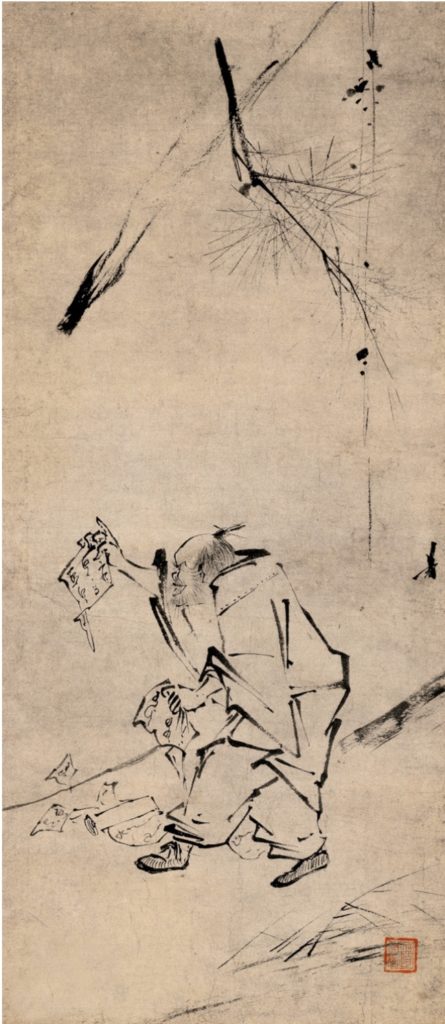
(Mitsu Memorial Museum, Japan)
Chinese Chan Buddhism has a strong tendency to deny the value of “words” and discursive thought in reaching enlightenment, which is vividly depicted by the above classical Chinese painting “The Sixth Patriarch Tearing a Sutra.” This is also the reason why, as a Ru scholar, despite my religious experience being once triggered by Buddhist texts, I only agree with part of Buddhist teaching.
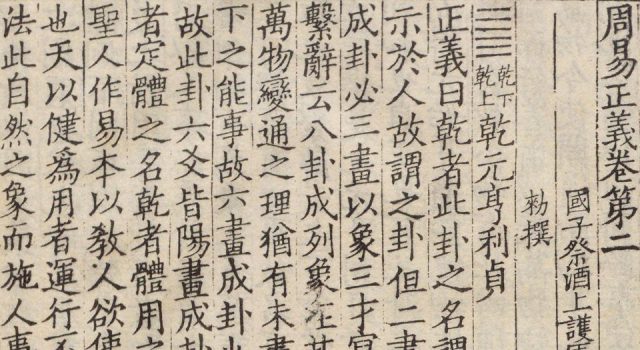
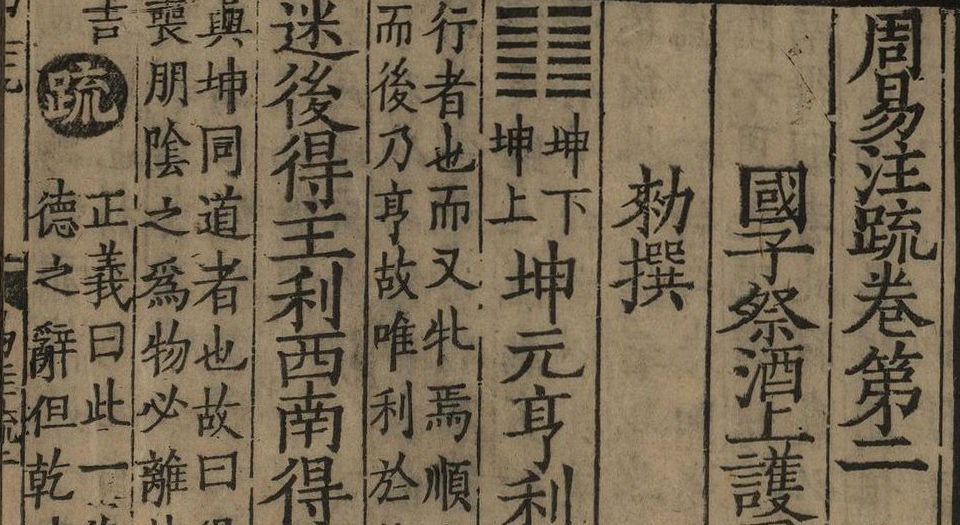
The second ancient Chinese classics, the transcription of which engenders intensive religious experience in me, is the Classic of Change. In particular, when I read the first two hexagrams, Qian and Kun (symbolized respectively by six unbroken and six broken lines as “heaven” and “earth,” or “yang” and “yin”), together with their traditional commentaries in the Ruist tradition, I felt the harmonizing power of yin and yang within my body in unison with the entire universe. the Classic of Change within the English-speaking philosophical academia is still not as well-known as Laozi’s Dao De Jing, and this is the major reason why the metaphysical side of Ruism has not yet been distinctively appreciated.
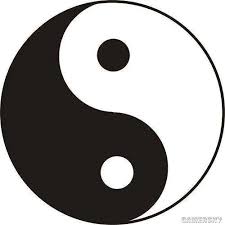
“Harmony” is a pivotal Ruist idea presented by the Classic of Change. In the symbol of Yin/Yang fish, yang moves to its utmost point where yin emerges, vice versa, which speaks to the four necessary components of the Ru idea of harmony: diversity, tension, accommodation, and transformation.

When I pursued my second PhD of religious studies at Boston University in 2014-2018, I organized a student faith group called “Boston University Confucian Association,” which is also the first university student Confucian group in the U.S. I designed its icon according to symbol of the yin/yang fish, and in the middle, the two identical characters are Ren (仁, benevolence or humaneness), the cardinal human virtue in Ruism.

I transcribed the aforementioned ancient Chinese classics in this old library of Nankai University beside a lake called Xinkai Lake. Oddly, this library was actually one of natural science, and therefore, when I audited classes in the department of physics, most of my studies of natural science dwelled there. However, because this library was close to my dorm, I also read “my own books” such as those ancient Chinese classics there. Transcribing books is a powerful exercise, and the intensive religious experiences transpired in the trail among the trees and near the lake. This is not quite an excessively nice place, but still, it is something in my life.

I studied in the center of cartesian studies at the University of Paris-Sorbonne (Paris-IV) in 2007-2008. The first meeting between me and my advisor, Prof. Fabien Chareix, an expert in the early modern history of philosophy and science, took place in this bookstore. Fabien grabbed a book of his (which is about Galileo) from the bookshelf of this bookstore, signed his name, and bought it for me. We then had beer together in a bar on the opposite side of the Place of Sorbonne. It was utterly a culturally shocking experience for me to choose Paris as my first station of studying abroad. Even if I only studied in France for one year (before which I prepared my French language for three years), I feel part of my brain has been changed because of it. BTW, I also bought the collective works of Spinoza from this store. 🙂

I studied as a Harvard-Yenching Visiting Fellow at Harvard University between 2011-2013. During the time, one of my favorite places in the campus of Harvard is a small meditation room in the CSWR. There are classical Chinese landscape paintings decorated on the walls of the room, and therefore, I felt quite at home whenever sitting there to practice meditation.

Boston University Confucian Association organized a weekly reading group on Ru classics every Friday afternoon at the Thurman Room of Marsh Chapel, Boston University during 2014-2018. As indicated by the picture, the participants include mainly Chinese international students, Bostonian residents, international scholars, etc.
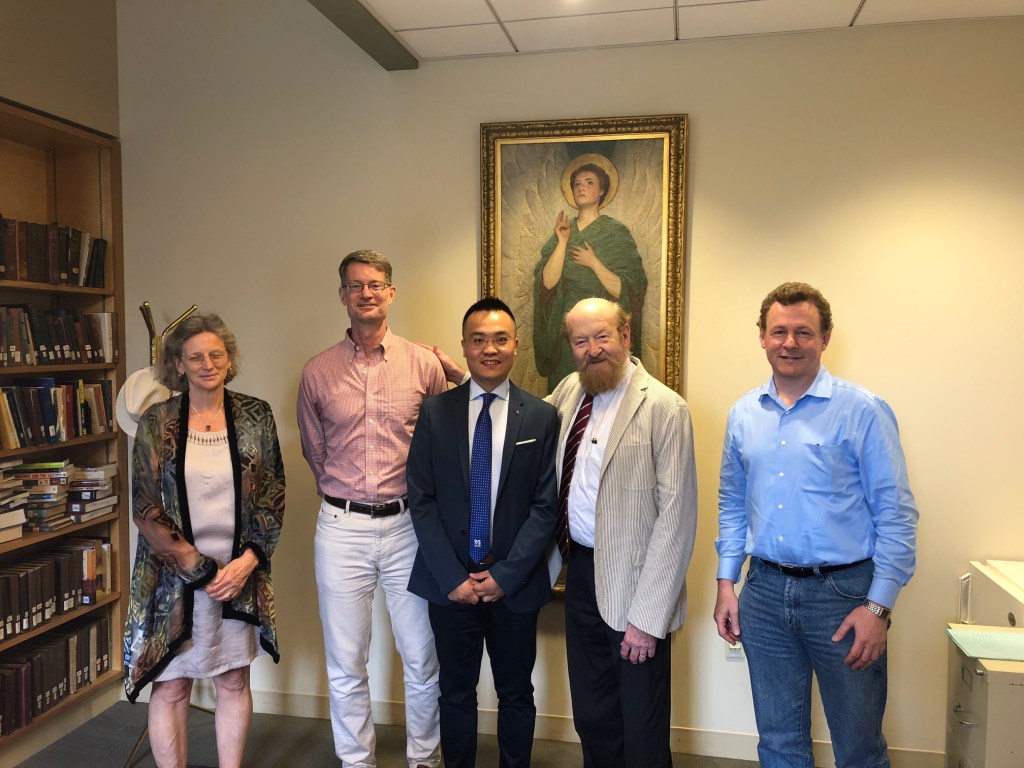
In the summer of 2018, I defended my dissertation “A Comparative Philosophy of Religion on ‘Creatio Ex Nihilo’ and ‘Sheng Sheng (生生, Birth Birth)'” at Boston University. My supervisor, Prof. Robert Neville stretched his arm over me and Prof. Stephen Angle to indicate that we three are Confucians. Prof. Kimberley Patton at Harvard Divinity School on the far left is an expert on comparative religion, who trained me on the methodologies of comparative religion. Prof. Wesley Wildman at Boston University on the far right is an expert on the scientific study of religions, who taught me the calculation of tensor in Einstein’s theory of general relativity, the most advanced math I have ever learned.
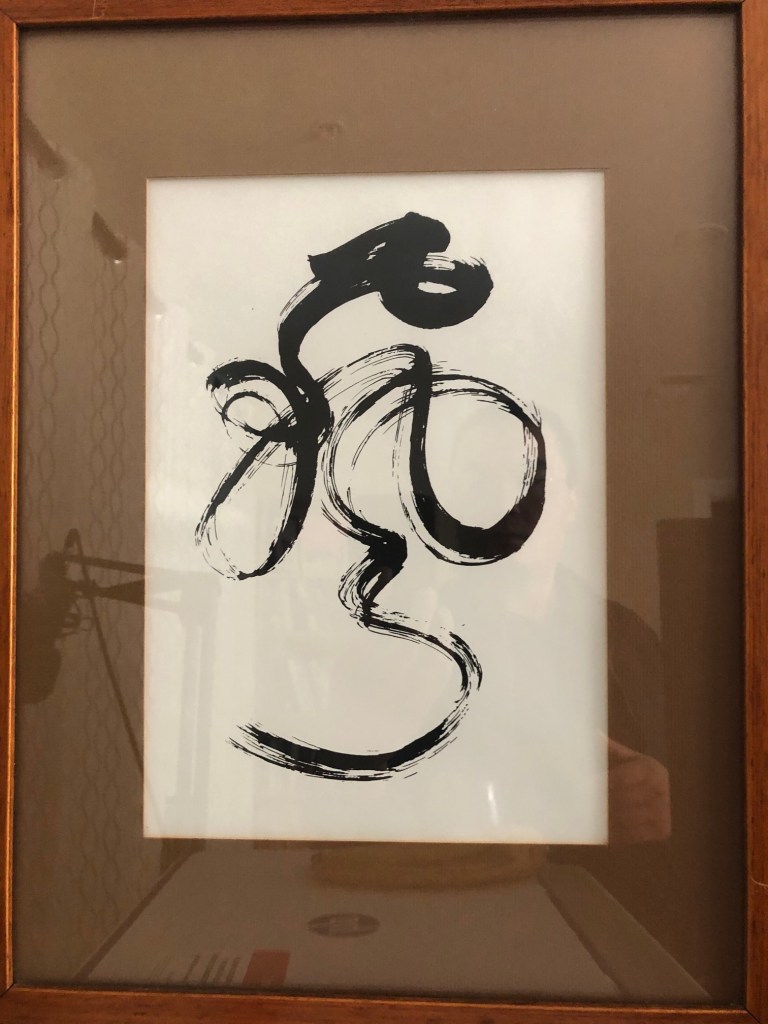
In the new year of 2021, my good friend and mentor, Prof. Robert Neville, via his wife Beth Neville, sent me a new year gift. It is a Chinese calligraphy of the character “飛” (flying), which the Neville couple got from their travel to Japan.

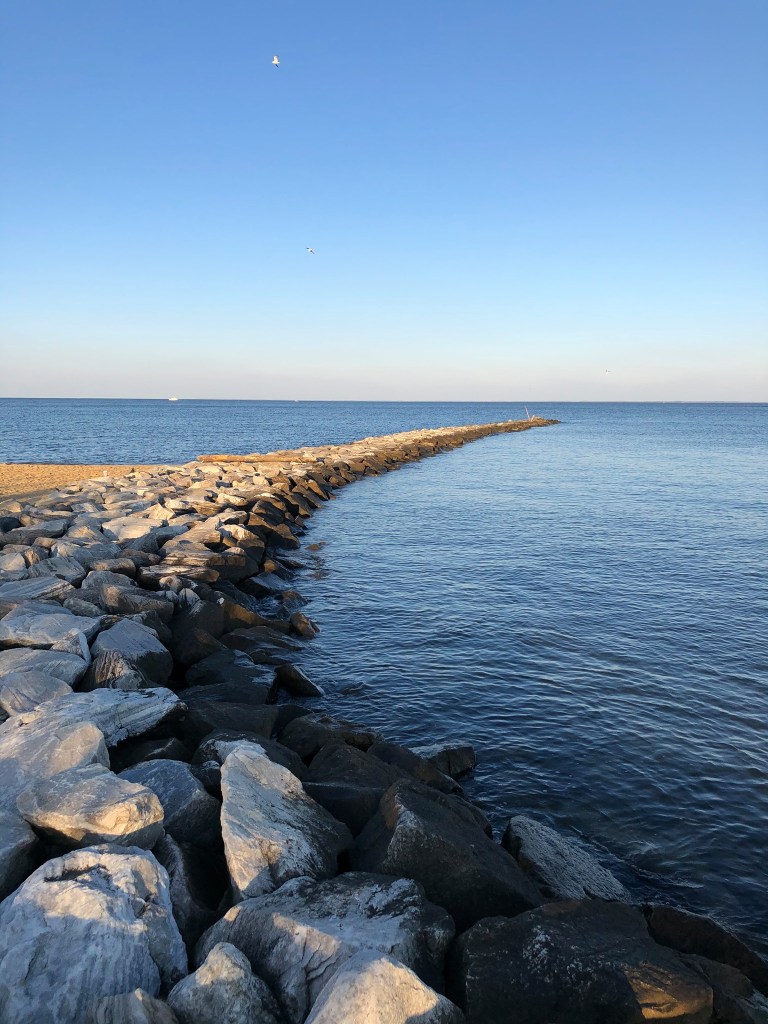


Washington College is located in the Eastern Shore area of Maryland, and I live in Annapolis. Surrounding the Chesapeake Bay, the area is among geographically the most diverse in the U.S. During the pandemic, walking and hiking in varying parks and waterfronts with my family becomes a line of oxygen for my life.
 Bin Song